The quest for energy resources has driven the oil and gas industry to explore some of the most remote and challenging environments on Earth. As easily accessible reserves dwindle, companies are venturing into deeper waters to tap into untouched reservoirs below the ocean floor. This shift towards deepwater exploration has been made possible by significant advancements in subsea technology. In this article, we explore the cutting-edge technologies enabling oil exploration and production at greater ocean depths, overcoming the formidable challenges of the deep sea.
The Challenges of Deepwater Exploration
Deepwater exploration is a complex endeavor fraught with technical and environmental challenges. The ocean's depths present extreme conditions that can hinder operations:
- High Pressure and Low Temperatures: At depths exceeding 2,000 meters, equipment must withstand absolute pressures exceeding 200 bar (approximately 200 times atmospheric pressure at sea level, or roughly 200 atm gauge pressure). and temperatures approaching freezing.
- Harsh Environmental Conditions: The deep sea is characterized by corrosive saltwater, unpredictable currents, and limited visibility, complicating installation and maintenance of equipment.
- Logistical Hurdles: Remote locations far from shore require substantial logistical support, increasing costs and operational complexity.
- Safety and Environmental Risks: The potential for accidents or spills is amplified in deepwater settings, necessitating robust safety measures and rapid response capabilities.
Overcoming these challenges requires innovative subsea technologies that can operate reliably and efficiently under extreme conditions.
Advances in Subsea Robotics and Remotely Operated Vehicles (ROVs)
One of the most significant advancements in subsea technology is the development of sophisticated Remotely Operated Vehicles (ROVs). These unmanned, tethered robots are the workhorses of deepwater exploration.
Enhanced Capabilities of Modern ROVs
Modern ROVs are equipped with high-definition cameras, manipulator arms, and a suite of sensors, allowing operators to perform intricate tasks from the surface:
-
Deepwater Operations: ROVs can operate at depths exceeding 3,000 meters, expanding the reach of exploration activities.
-
Precision and Dexterity: Advanced control systems enable precise manipulation of tools and equipment, essential for complex construction and repair tasks.
-
Improved Navigation: Enhanced thruster designs and sonar systems improve maneuverability and positioning in challenging underwater environments.
-
Advanced Control Systems: Incorporation of artificial intelligence and machine learning algorithms enables semi-autonomous decision-making, reducing operator workload.
Enhanced Subsea Communication Systems
Effective communication is vital for coordinating subsea operations. Advances in communication technologies have significantly improved data transmission between underwater equipment and surface control centers.
Fiber Optic Communication
Fiber optic cables provide high-bandwidth, low-latency communication links:
- High-Speed Data Transfer: Essential for real-time video feeds, sensor data, and control signals.
- Reliability: Less susceptible to electromagnetic interference compared to traditional copper cables.
Acoustic Communication
In situations where physical cables are impractical, acoustic communication systems offer an alternative:
- Wireless Communication: Uses sound waves to transmit data through water.
- Extended Range: Modern systems can communicate over several kilometers, though at lower data rates than fiber optic links.
Subsea Processing and Boosting Systems
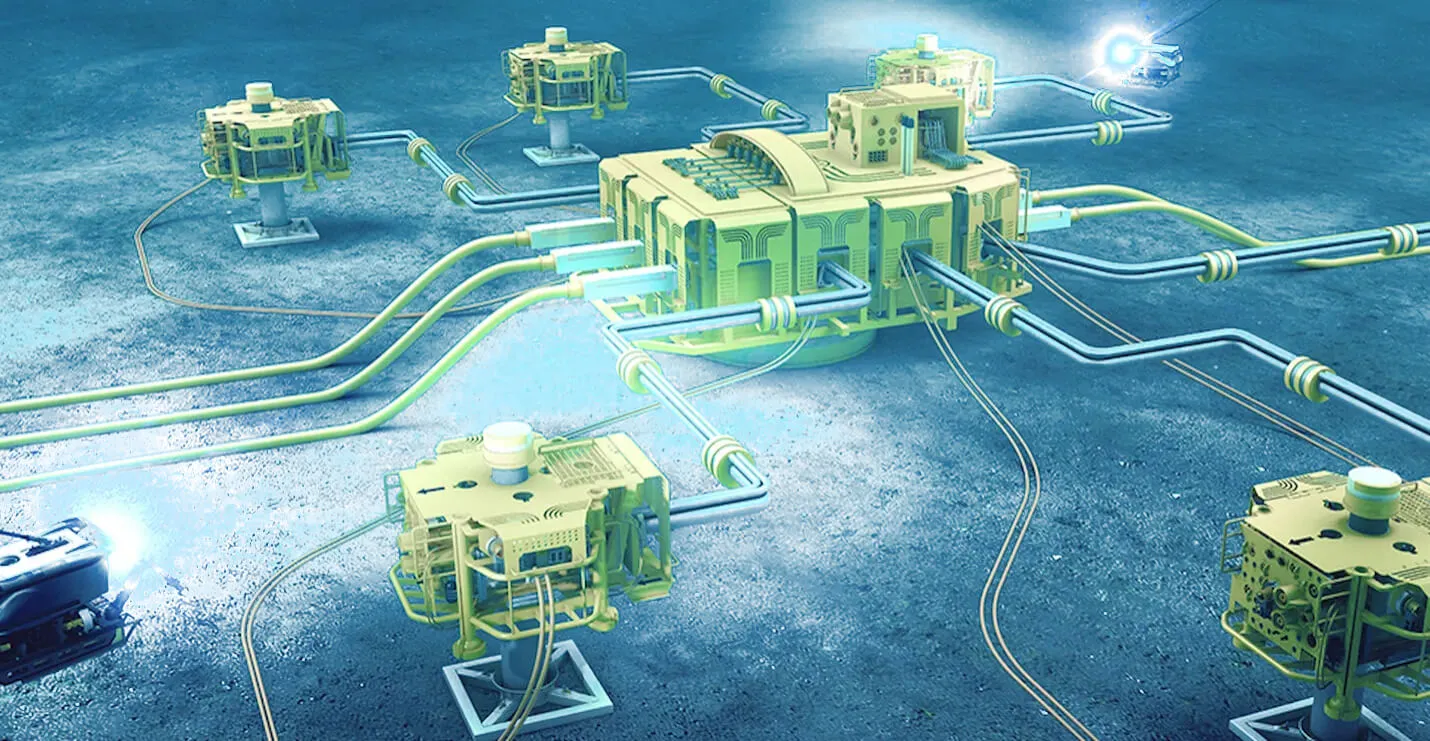
Traditionally, extracted hydrocarbons are processed on surface facilities. However, subsea processing technologies are shifting these operations to the ocean floor.
Subsea Separation and Boosting
- Separation Systems: Allow for the removal of water and sand from oil and gas mixtures at the seabed, reducing the volume of material lifted to the surface.
- Multiphase Boosting Pumps: Increase the pressure of the hydrocarbon flow, enabling transportation over long tiebacks without the need for surface compression.
Benefits of Subsea Processing
- Cost Reduction: Eliminates or reduces the need for large surface platforms, lowering capital and operational expenditures.
- Enhanced Recovery: Improves flow rates and recovery from reservoirs with declining pressure.
- Environmental Impact: Minimizes the surface footprint and reduces the potential for surface spills.
Improved Materials and Design
Engineering materials capable of withstanding deep-sea conditions are crucial for reliable operations.
Advanced Metallurgy and Composites
- Corrosion-Resistant Alloys: Materials such as titanium and duplex stainless steels offer superior resistance to corrosion and fatigue in high-pressure, saline environments. Composite Materials: High-strength, lightweight composites are used in specialized subsea applications such as fairings and non-structural components; primary risers and umbilicals remain steel or flexible pipe due to superior fatigue and pressure-cycling performance in the deepwater environment.
Innovative Structural Designs
- Flexible Risers: Allow for movement and absorb stresses caused by currents, waves, and vessel motion.
- Modular Equipment: Simplifies installation and maintenance, enabling quicker deployment and retrieval.
Autonomous Underwater Vehicles (AUVs)
AUVs are unmanned, untethered submarines that operate autonomously, executing pre-programmed missions without a continuous surface tether.
Applications in Exploration
- Seabed Mapping: High-resolution sonar and imaging systems create detailed maps of the ocean floor to support well planning and pipeline routing.
- Pipeline Inspection: Autonomous inspections of pipelines and infrastructure support maintenance planning and integrity management.
- Environmental Monitoring: Collect data on oceanographic conditions and marine ecosystems.
Technological Advancements
- Extended Mission Duration:
- Enhanced Sensors: Integration of advanced sensors improves data quality, resolution, and scope.
Digital Technologies and Data Analytics
The integration of digital technologies is transforming subsea operations through enhanced monitoring and optimization.
Internet of Things (IoT) and Sensors
- Real-Time Monitoring: Networks of sensors collect continuous data on equipment performance and environmental conditions, enabling faster operational decisions.
- Predictive Maintenance: Data analytics identify early indicators of equipment degradation, reducing unplanned downtime and intervention costs.
Artificial Intelligence (AI) and Machine Learning
- Data Analysis: AI algorithms process large volumes of sensor and production data to optimize output and identify operational trends.
- Autonomous Decision-Making: Machine learning enables control systems to adapt and respond to changing subsea conditions with reduced human intervention.
Case Studies of Technological Implementation
The Gulf of Mexico Deepwater Projects
Offshore Brazil Developments
Environmental Considerations
As the industry pushes into deeper waters, minimizing environmental impact is more important than ever.
Advanced Monitoring Systems
- Leak Detection: High-sensitivity chemical and acoustic sensors detect leaks at an early stage, enabling rapid response and containment.
- Impact Assessment: Continuous monitoring of the marine environment supports ongoing assessment and mitigation of operational impacts.
Sustainable Practices
- Reduced Emissions: Subsea processing reduces the need for flaring and venting at surface facilities.
- Smaller Footprint: Reduction or elimination of large surface facilities decreases ecological disturbance at the sea surface.
The Future of Subsea Technology
The future holds significant possibilities for further advancement in subsea capability:
Robotics and Automation
- Swarm Robotics: Coordinated groups of smaller, specialized robots could perform inspection and maintenance tasks more efficiently than single large vehicles.
- Advanced AI: Greater autonomy in subsea operations will progressively reduce the need for direct human intervention.
New Frontiers
- Ultra-Deepwater Exploration: Continued engineering development is pushing operational depth limits to access previously unreachable reserves.
- Integration with Renewable Energy: Hybrid systems combining oil and gas infrastructure with offshore wind or tidal energy generation are being explored to reduce the carbon intensity of offshore operations.
Conclusion
Advancements in subsea technology have been pivotal in enabling the oil and gas industry to explore and produce resources from the deepest parts of the ocean. Innovations in robotics, communication, processing, materials, and digital technologies have addressed the formidable challenges of deepwater environments. As the industry continues to evolve, these technologies will play a crucial role in meeting global energy demands while striving for sustainability and environmental stewardship.
By embracing these technological advancements, the industry not only enhances its operational capabilities but also sets the stage for a future where energy production is more efficient, safe, and environmentally conscious. Continued investment in research and development remains essential to drive innovation and unlock the full potential of subsea exploration.