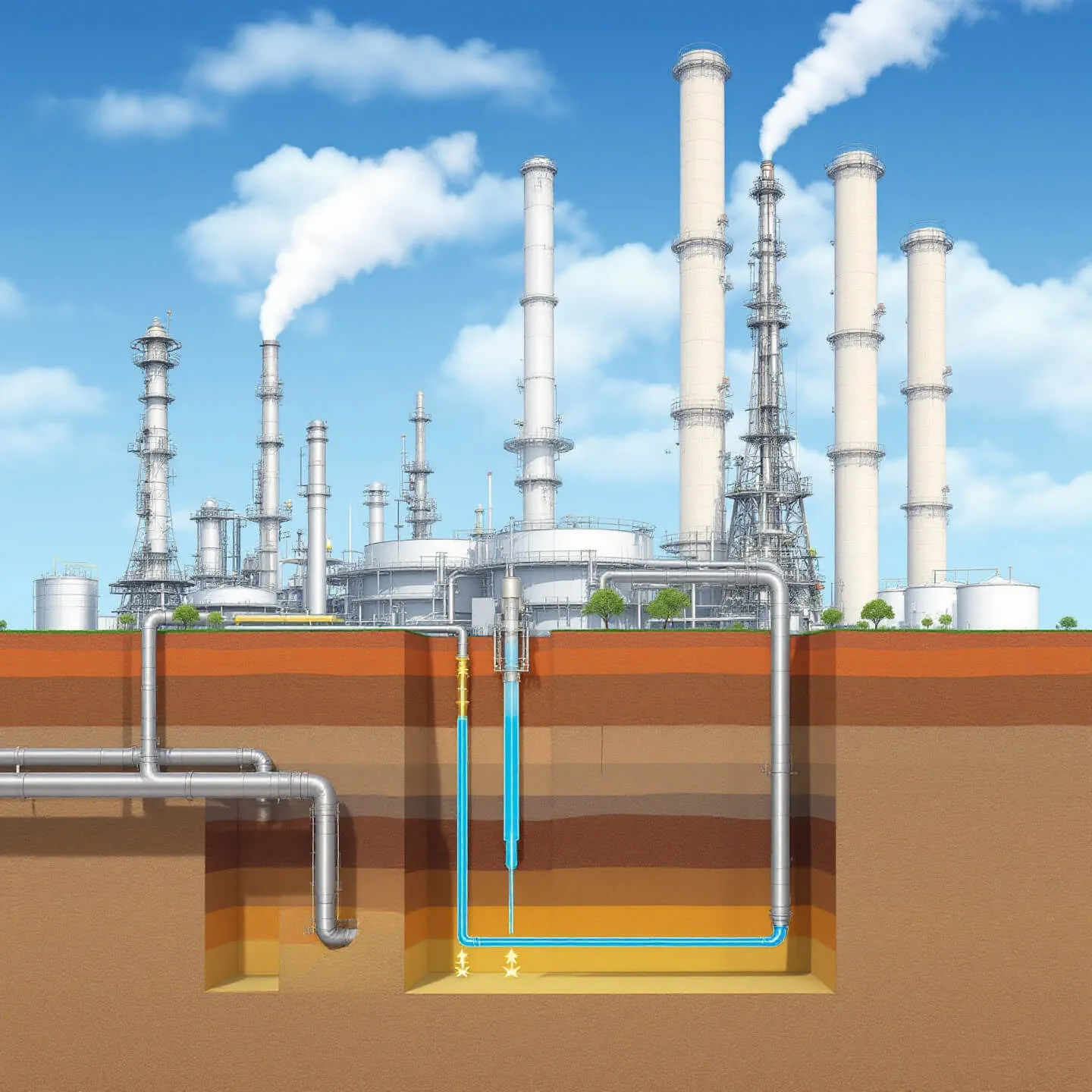
Carbon Capture and Storage (CCS) has emerged as a critical technology in mitigating emissions from the oil and gas sector, enabling the industry to reduce its carbon footprint.
This article explores the technologies and methods employed in capturing and storing carbon emissions from oil and gas operations. Understanding these technologies is essential for industry stakeholders aiming to balance energy demands with environmental stewardship.
The Importance of Carbon Capture and Storage (CCS)
CCS refers to the process of capturing CO2 emissions produced from industrial processes, transporting them to a storage site, and depositing them where they will not enter the atmosphere — typically in underground geological formations. The implementation of CCS is relevant for several reasons:
- Environmental Protection: Reduces the amount of CO2 released into the atmosphere, contributing to climate change mitigation.
- Regulatory Compliance: Helps companies meet emission targets set by governments and international agreements.
- Economic Benefits: Opens avenues for enhanced oil recovery and other industrial applications of captured CO2.
Technologies for Capturing Carbon Emissions
Capturing CO2 is the first step in the CCS process. The primary technologies used in the oil and gas industry for carbon capture are:
Pre-Combustion Capture
Pre-combustion capture involves removing CO2 before the combustion process. This method is commonly used in gasification plants where fuel is converted into a mixture of hydrogen and carbon monoxide (syngas). The steps include:
- Gasification: Coal or natural gas is converted into syngas.
- Shift Reaction: Syngas reacts with steam to produce hydrogen and CO2.
- CO2 Separation: CO2 is separated from hydrogen using physical or chemical absorption methods.
Advantages:
- Produces hydrogen that can be used as a clean fuel.
- High CO2 concentration in the process stream makes separation more efficient than in post-combustion applications.
Challenges:
- Requires significant modifications to existing plants.
- High initial capital investment.
Post-Combustion Capture
Post-combustion capture is the most straightforward method to integrate into existing power plants and process facilities. It involves capturing CO2 from flue gases after the combustion of fossil fuels.
Techniques Used:
- Chemical Absorption: Using solvents such as amine solutions to absorb CO2 from the flue gas stream.
- Physical Adsorption: Employing solid sorbent materials such as activated carbon or zeolites.
- Membrane Separation: Using selective membranes to separate CO2 from other flue gas components.
Advantages:
- Can be retrofitted to existing plants without fundamental process redesign.
- The most mature capture technology with the broadest operational track record.
Challenges:
- Low CO2 partial pressure in flue gases requires greater energy input for capture.
- Solvent degradation and management of degradation products create operational and environmental considerations.
Oxy-Fuel Combustion
Oxy-fuel combustion involves burning fossil fuels in a stream of high-purity oxygen rather than air, resulting in a flue gas composed primarily of water vapor and CO2, which can be readily separated.
Process:
- Air Separation: Oxygen is separated from nitrogen using a cryogenic air separation unit or pressure swing adsorption.
- Combustion: Fuel is burned in the oxygen-rich environment, producing a CO2-rich flue gas.
- CO2 Capture: Water vapor is condensed and removed, leaving a concentrated CO2 stream suitable for compression and transport.
Advantages:
- High-purity CO2 stream simplifies downstream processing.
- Significantly reduces nitrogen oxide (NOx) emissions compared to air-fired combustion.
Challenges:
- Cryogenic air separation is energy-intensive and adds to the overall plant energy penalty.
- Higher operational costs relative to conventional combustion.
Methods of Carbon Storage
Once captured, CO2 must be stored securely to prevent atmospheric release. The primary methods of carbon storage include:
Geological Storage
Geological storage involves injecting supercritical CO2 into underground rock formations at sufficient depth and pressure to maintain containment. Suitable sites include:
- Depleted Oil and Gas Fields: Proven structural traps with existing well and infrastructure knowledge.
- Deep Saline Aquifers: Porous and permeable rock formations saturated with saline formation water, offering large storage volumes.
- Unmineable Coal Seams: CO2 adsorbs onto coal surfaces, potentially displacing methane that can be recovered.
Process:
- Site Selection: Geologically stable formations with adequate cap-rock integrity are identified and characterized.
- Injection: CO2 is compressed to supercritical conditions and injected via dedicated injection wells.
- Monitoring: Ongoing surveillance — including seismic monitoring, wellbore integrity testing, and geochemical sampling — ensures CO2 remains contained within the storage complex.
Advantages:
- Large potential storage capacity, particularly in deep saline aquifers.
- Proven approach with operational experience from enhanced oil recovery projects.
Challenges:
- Risk of leakage if cap-rock integrity is compromised or wellbore cement fails.
- Requires long-term monitoring and a clear regulatory framework for post-injection stewardship.
Mineral Carbonation
Mineral carbonation involves reacting CO2 with naturally occurring metal-oxide-bearing silicate minerals — such as serpentine or olivine — to form thermodynamically stable solid carbonates.
Process:
- CO2 Reaction: CO2 is brought into contact with magnesium- or calcium-bearing silicate minerals under controlled temperature and pressure conditions.
- Solid Carbonate Formation: CO2 is permanently fixed as magnesite, calcite, or related carbonate minerals.
Advantages:
- Produces a chemically and physically stable solid, eliminating the risk of gaseous CO2 leakage.
- No requirement for long-term subsurface monitoring of a gas phase.
Challenges:
- Natural reaction kinetics are slow; accelerating the reaction to industrial rates requires significant energy input.
- Large-scale deployment requires mining and processing substantial quantities of silicate minerals.
Utilization of Captured CO2
Rather than permanent storage, captured CO2 can be directed into industrial utilization pathways:
- Enhanced Oil Recovery (EOR): CO2 is injected into mature oil reservoirs to reduce oil viscosity and increase displacement efficiency, improving recovery.
- Chemical Production: CO2 serves as a feedstock for producing chemicals such as urea for fertilizers and methanol.
- Biofuel Production: Microalgae cultivation systems can utilize CO2 as a carbon source for biomass and biofuel production.
Advantages:
- Can generate revenue streams that partially offset capture costs.
- Reduces the net cost of the overall CCS chain where utilization markets exist.
Challenges:
- The volume of CO2 that can be absorbed by current utilization markets is small relative to total industrial emissions.
- Some utilization pathways result in eventual re-release of CO2, limiting their contribution to permanent emissions reduction.
Challenges and Solutions in CCS Implementation
Technical Challenges:
- Energy Penalty: The energy required for capture, compression, transport, and injection reduces the net output efficiency of the host facility.
- Infrastructure Requirements: Large-scale CCS deployment requires dedicated pipeline networks, compression stations, and injection facilities.
Economic Challenges:
- Capital and Operating Costs: CCS projects carry substantial upfront capital costs and ongoing operating expenditures.
- Market Uncertainty: Variability in energy prices and carbon credit values affects the economic case for individual projects.
Regulatory Challenges:
- Policy Gaps: Inconsistent or absent regulatory frameworks in many jurisdictions limit investment confidence.
- Long-Term Liability: Responsibility for stored CO2 over geological timescales requires clear legal and regulatory assignment.
Solutions:
-
Technological Development: Continued research into lower-energy capture solvents, solid sorbents, and membrane materials.
-
Government Incentives: Carbon pricing mechanisms, tax credits, and direct funding support for CCS projects.
-
Public-Private Partnerships: Collaborative models that distribute risk and cost between governments and industry participants.
-
Digital Technologies: Application of real-time data analytics, machine learning, and remote sensing to improve monitoring reliability and optimize injection operations.
-
International Collaboration: Cross-border initiatives to share subsurface storage resources, technical knowledge, and regulatory best practices.
Conclusion
Carbon Capture and Storage represents a technically viable pathway for the oil and gas industry to reduce its CO2 emissions and contribute to broader climate objectives. While significant technical, economic, and regulatory challenges remain, continued engineering innovation and supportive policy frameworks can enable CCS to scale.
The subsurface expertise accumulated over decades of oil and gas production provides a strong foundation for deploying CCS at the scale required.
For more insights on carbon management and sustainable practices in the oil and gas industry, subscribe to our newsletter and stay updated.
References
- International Energy Agency (IEA) – Carbon Capture, Utilisation and Storage
- Global CCS Institute – The Global Status of CCS
- U.S. Department of Energy – Carbon Storage Research