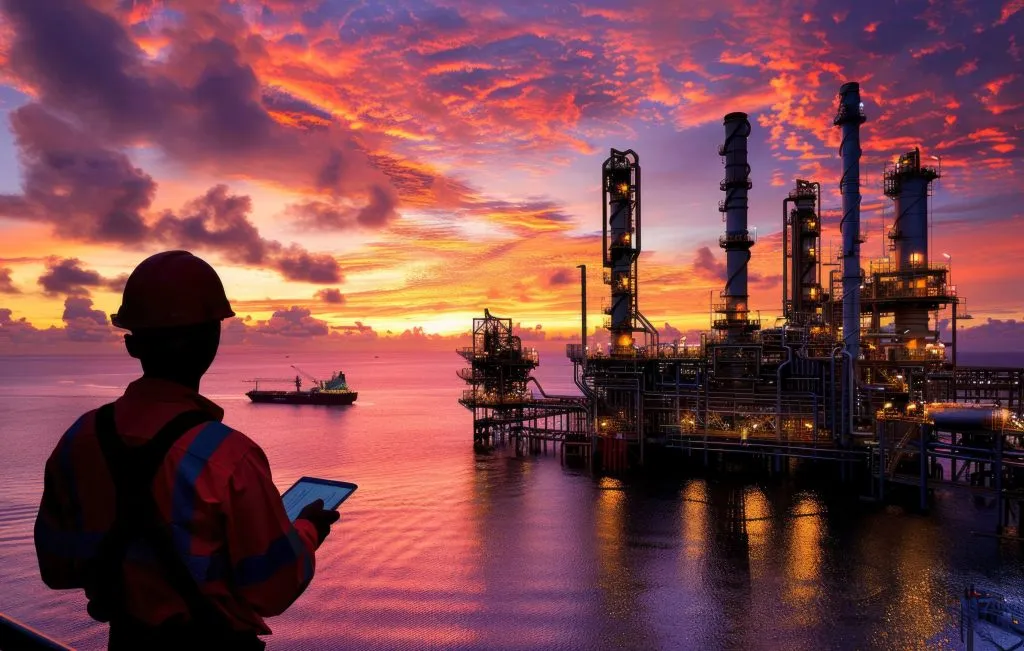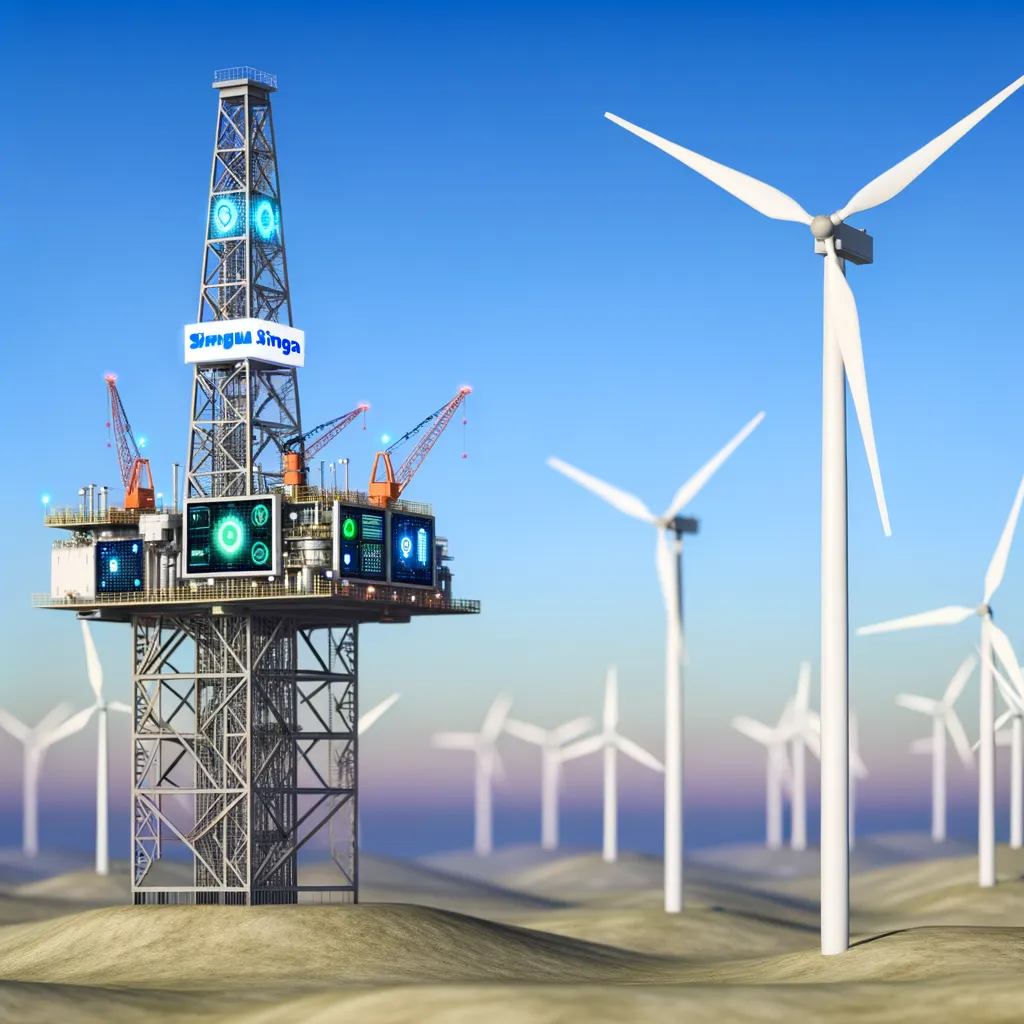
The oil and gas industry is undergoing a significant shift driven by new technologies. These innovations are increasing efficiency and production rates while also supporting a broader transition toward more sustainable energy operations. This article examines the key technological advancements transforming oil and gas exploration, production, and processing.
Enhanced Oil Recovery Techniques
The drive to increase recovery rates from existing reservoirs has led to the development and refinement of Enhanced Oil Recovery (EOR) techniques. Conventional primary and secondary recovery methods leave a substantial volume of oil behind in the reservoir. EOR technologies aim to recover this residual oil by modifying reservoir conditions or fluid properties to improve displacement and sweep efficiency.
Thermal recovery is one of the most established EOR methods, particularly for heavy crude oil. It involves injecting steam into the reservoir to reduce oil viscosity, improving flow characteristics and enabling more effective pumping to surface. Steam-assisted gravity drainage (SAGD) and cyclic steam stimulation (CSS) are widely applied variants of this approach, especially in heavy oil and oil sands developments.
Chemical injection is another well-proven EOR method, involving the introduction of polymers, surfactants, or alkaline agents — or combinations thereof — into the reservoir. Polymers improve the mobility ratio between injected water and reservoir oil, enhancing sweep efficiency. Surfactants and alkali reduce interfacial tension between oil and water, mobilizing trapped oil within the pore matrix. The effectiveness of chemical EOR is highly reservoir-specific and requires careful laboratory screening and field design.
Gas injection, using carbon dioxide (CO₂), nitrogen, or hydrocarbon gas, is widely applied across a range of reservoir types. Injected gas can achieve miscibility with reservoir oil under appropriate pressure and temperature conditions, reducing viscosity and improving displacement efficiency. CO₂ injection carries the additional benefit of contributing to carbon capture and storage (CCS) objectives, sequestering greenhouse gas emissions within the reservoir.
Microbial EOR remains an area of active research with very limited field deployment. Proposed mechanisms include biosurfactant production and selective permeability modification, but reproducibility and field-scale performance remain unproven. Commercial application is not yet established.
Nanotechnology is also being investigated as a means of improving EOR performance. Research in this area continues, though commercial-scale application remains at an early stage.
These advances in EOR reflect the industry's sustained commitment to maximizing recovery from existing assets, reducing the need for new greenfield developments, and improving the overall economics of mature fields.
Digitalization and Smart Technologies
Digital transformation represents one of the most impactful shifts currently underway in the oil and gas industry. Big data analytics and machine learning are being applied across the exploration and production workflow, enabling faster and more accurate interpretation of large geological and operational datasets. Machine learning algorithms support seismic interpretation, well log analysis, and production optimization by identifying patterns across historical datasets that would be impractical to process manually. This improves drilling target selection and reduces the risk of dry holes.
The Internet of Things (IoT) has materially changed how remote monitoring and equipment management are conducted across upstream, midstream, and downstream operations. Networks of sensors installed on drilling equipment, pipelines, compressors, and process vessels transmit real-time operational data to centralized control systems. This continuous data stream enables operators to track equipment condition, process parameters, and environmental indicators simultaneously.
The data collected supports more informed operational decision-making and strengthens safety management systems through continuous condition visibility.
Predictive maintenance is a direct outcome of integrating IoT and analytics. Rather than responding to equipment failures after they occur, predictive maintenance uses condition monitoring data and analytical models to anticipate degradation before it leads to failure. This reduces unplanned downtime, extends equipment service life, and lowers overall maintenance costs.
Improved data quality and analytical capability also support better risk management and environmental performance. More accurate reservoir characterization reduces unnecessary drilling activity, while real-time process monitoring helps detect and respond to potential leak or emission events more rapidly.
The digitalization of oil and gas operations does not stand alone — it is closely linked to the broader sustainability agenda discussed in the following section. Together, digital tools and cleaner technologies are reshaping how the industry manages its environmental footprint while continuing to meet global energy demand.
Sustainable Solutions and Renewable Integration
The oil and gas sector is increasingly adopting technologies and practices aimed at reducing environmental impact and integrating renewable energy into its operations. Solar power, wind energy, carbon capture and storage, and green hydrogen are all being explored and deployed as part of this transition.
Solar and wind technologies are being incorporated at operational sites to reduce dependence on diesel generation and lower the carbon intensity of field operations. These applications reduce both fuel consumption and associated emissions from day-to-day operations.
Carbon capture and storage (CCS) is a key technology for addressing emissions from fossil fuel combustion and industrial processes. CCS systems capture CO₂ at the point of emission — at refineries, processing plants, or power generation facilities — and transport it for permanent geological storage. Deployment of CCS at oil and gas facilities is expanding, supported by ongoing work to improve capture efficiency and reduce the overall cost of the process.
Green hydrogen — produced by electrolysis of water using renewable electricity — is attracting significant interest as a low-carbon energy carrier. The oil and gas industry is well positioned to contribute to hydrogen infrastructure development, given existing expertise in gas handling, storage, and distribution. Companies are forming partnerships with renewable energy providers and investing in hydrogen production and transport infrastructure to support potential large-scale deployment.
Strategic partnerships between oil and gas companies, technology developers, renewable energy firms, and research institutions are accelerating progress across all these areas. Collaborative development reduces individual risk exposure, enables sharing of technical knowledge, and helps bring down the cost of emerging technologies more quickly than any single organization could achieve alone. Joint ventures in CCS, co-development of tailored renewable energy solutions, and hydrogen supply chain partnerships are all active areas of industry collaboration.
The integration of renewable energy, CCS, and green hydrogen into oil and gas operations reflects the sector's recognition that long-term viability requires a meaningful reduction in environmental impact. These efforts, combined with digital optimization, position the industry to contribute constructively to the global energy transition.
Conclusions
Technological progress across the oil and gas sector is raising the bar for operational efficiency, safety, and environmental performance. Enhanced recovery techniques extend the productive life of existing reservoirs, digital tools improve decision-making and equipment reliability, and sustainable technologies reduce the carbon footprint of operations. As these innovations continue to mature and converge, they will play an important role in shaping a more balanced and responsible global energy system.