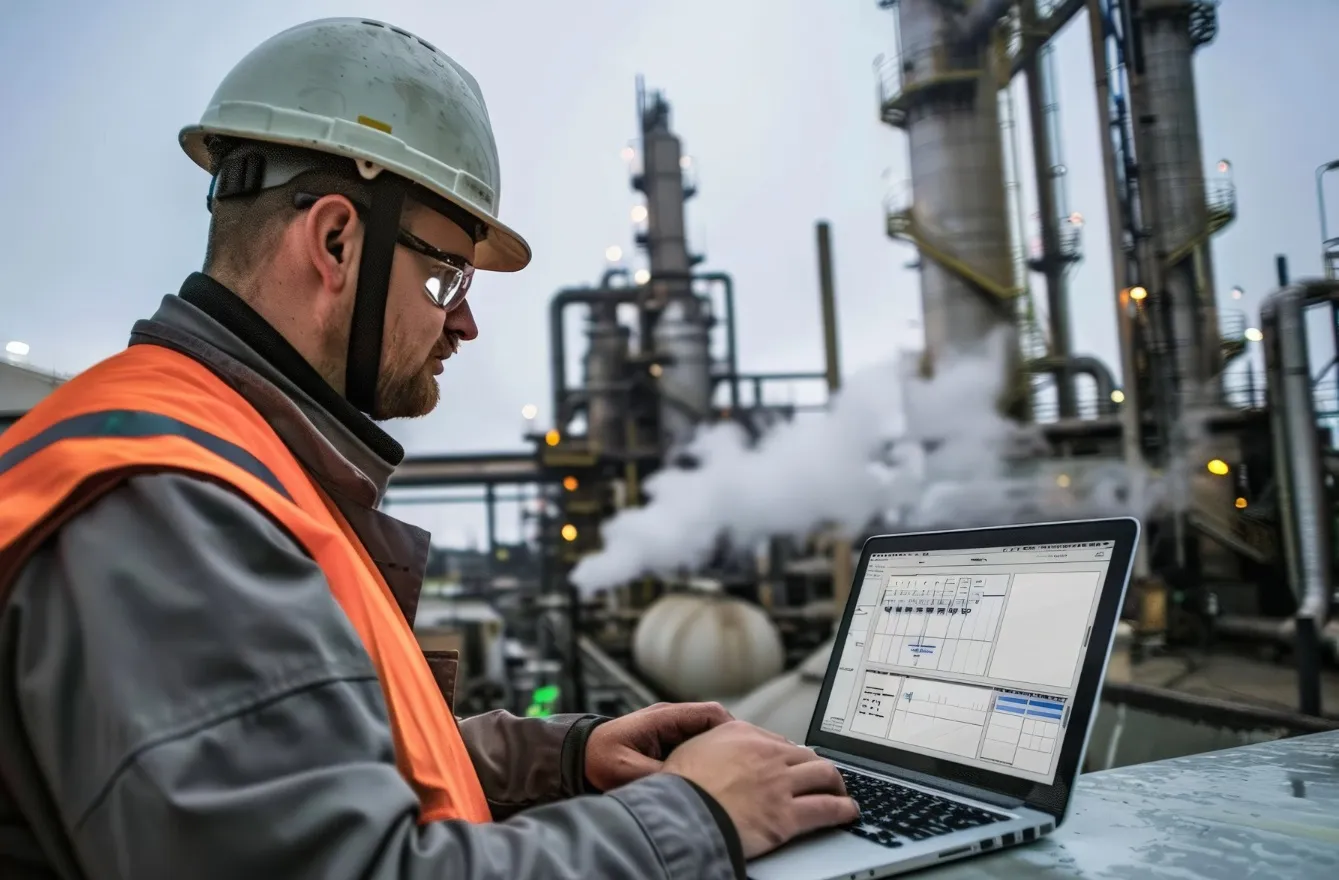
The Internet of Things (IoT) is one of the biggest technological shifts behind that change.
This article looks at how IoT is reshaping telecommunications in oil and gas — what it actually delivers, and what still has to be sorted out. We cover data collection, operational efficiency, and the way it changes communication across the industry.
Understanding IoT in Oil and Gas Telecommunications
The Internet of Things (IoT) is a network of physical devices with sensors, software, and other technology embedded in them, all exchanging data with other devices and systems over the internet or a dedicated comms network. In oil and gas, those devices sit at every stage of the value chain — from exploration and production (E&P) through to distribution and retail.
They pull large volumes of data off equipment, infrastructure, and the surrounding environment. That data rides telecommunications networks back to centralized or edge-based systems in real time, where it gets analyzed. From there you can monitor asset performance, plan maintenance ahead of a failure, and prove out safety compliance.
Enhancing Data Collection with IoT Devices
Data collection is what makes it possible to run this industry efficiently and safely. IoT devices sharpen the process in a few key ways:
Real-Time Monitoring
Sensors on drills, pumps, and pipelines stream continuous real-time data on operating parameters:
- Pressure and Temperature Sensors: Monitor the integrity of pipelines and pressure vessels to detect potential leaks or ruptures.
- Flow Meters: Measure the rate at which oil or gas is being extracted or transported.
- Vibration Sensors: Detect anomalies in rotating machinery that may indicate wear or impending failure.
You can react to an irregularity the moment it shows up. That means less unplanned downtime, and fewer accidents.
Predictive Maintenance
IoT devices enable a predictive maintenance approach:
- Data Analysis:
- Maintenance Optimization:
Environmental Monitoring
Environmental impact carries real weight in oil and gas. IoT devices give companies a way to keep an eye on the factors that matter:
- Emissions Sensors: Track pollutant levels to support compliance with environmental regulations.
- Leak Detection: Identify leaks in pipelines or storage tanks promptly to limit environmental damage.
- Seismic Sensors: Monitor geological activity that could affect drilling operations or present operational risks.
Asset Tracking
Add GPS and comms to an IoT device and you can track assets:
- Equipment Location: Knowing the precise location of equipment improves logistics and reduces losses.
- Inventory Management:
Improving Communication through IoT Integration
Coordinating operations this complex only works if communication holds up. IoT devices do a lot for those channels:
Remote Operations and Control
IoT enables remote monitoring and control of facilities:
- Offshore Platforms:
- Unmanned Facilities: Remote sites can be managed from a central location, reducing the requirement for on-site personnel and improving safety.
Enhanced Collaboration
Data collected by IoT devices is accessible across departments and locations:
- Unified Data Platform: Centralized data allows engineers, field workers, and management to collaborate effectively.
- Real-Time Updates: Stakeholders receive immediate updates on operational status, supporting prompt decision-making.
Emergency Response
When something goes wrong, IoT devices give you the information you need:
- Incident Detection: Sensors detect anomalies such as sudden pressure drops or temperature excursions.
- Alert Systems: Automated alerts notify relevant personnel to initiate emergency protocols.
- Resource Allocation: Real-time data supports efficient allocation of resources during emergency response.
Operational Efficiency Achieved through IoT
Put IoT devices to work and the efficiency gains show up directly:
Process Optimization
Continuous data streams allow for fine-tuning of operations:
- Performance Analytics:
- Process Adjustments: Changes can be implemented in real time to optimize extraction rates or reduce energy consumption.
Energy Management
Energy is one of the biggest cost drivers in oil and gas operations:
- Energy Consumption Monitoring: Track energy use across operations to identify areas of waste.
- Efficiency Improvements: Implement energy-saving measures informed by operational data.
Supply Chain Optimization
IoT devices help streamline the supply chain:
- Logistics Management: Real-time tracking of shipments and deliveries improves scheduling and reduces delays.
- Demand Forecasting:
Safety Enhancements
Safety comes first in this industry:
- Worker Monitoring: Wearable devices can monitor the health and safety status of personnel working in hazardous environments, provided they are certified for use in the applicable hazardous area classification (e.g., ATEX, IEC Ex) to prevent ignition risks in explosive atmospheres.
- Automated Shutdowns: Control systems can automatically initiate shutdowns when dangerous conditions are detected, in accordance with functional safety design principles and requirements such as those specified in IEC 61511 for Safety Instrumented Systems.
Case Studies: IoT Applications in Oil and Gas
Digital Oilfields
- Integrated Operations: IoT devices connect various components of the oilfield, from drilling equipment to transportation infrastructure.
- Data-Driven Decisions: Operators use data analytics to make informed decisions on production rates and resource allocation.
Pipeline Monitoring Solutions
- Smart Pipelines: Sensors detect leaks, pressure changes, and structural integrity issues along pipeline routes.
- Preventive Measures: Early detection systems help prevent environmental incidents and costly unplanned repairs.
Drilling Optimization
- Directional Drilling: Sensors provide real-time data on drill bit position and subsurface conditions.
- Reduced Downtime: Predictive maintenance keeps drilling equipment operational and reduces non-productive time.
Challenges and Considerations in IoT Integration
The upside is real. So are the problems that have to be worked through first:
Cybersecurity Risks
Every new connection is another way in:
- Vulnerable Systems: IoT devices can represent entry points for cyberattacks on operational technology networks.
- Data Protection: Sensitive operational data must be secured against unauthorized access.
- Regulatory Compliance: Companies must adhere to applicable cybersecurity frameworks and regulations governing industrial control systems.
Data Management Complexity
Volume alone creates problems:
- Data Storage: Scalable storage solutions are required to accommodate continuous data streams.
- Data Analysis: Advanced analytics tools are needed to extract actionable insights from raw sensor data.
- Integration: Ensuring compatibility between data from diverse devices and platforms requires careful architecture planning.
Infrastructure Investment
Doing this at scale takes serious capital:
- Hardware Costs: Sensors and devices must be installed and maintained across operations.
- Network Upgrades: Reliable, high-bandwidth communication networks are essential for real-time data transmission.
- Training: Personnel require training to manage and effectively utilize new technologies.
Interoperability Issues
Gear from different manufacturers rarely talks to each other out of the box:
- Standardization: The absence of universal industry-wide standards complicates integration efforts.
- Compatibility: Ensuring that devices and systems from multiple vendors work together requires additional engineering resources.
The Role of Telecommunications in IoT Success
No IoT deployment works without the telecoms infrastructure behind it:
High-Speed Networks
Reliable communication networks are essential:
- Fiber Optics: Provide high-bandwidth data transmission required for real-time monitoring applications.
- Wireless Networks: Enable connectivity in remote locations where installing wired infrastructure is impractical.
Satellite Communication
For offshore and remote onshore operations:
-
Global Coverage: Satellite links provide connectivity where terrestrial networks are unavailable, though latency (typically 500–700 ms for geostationary systems) may limit suitability for time-critical control applications.
-
Resilience: Satellite communication offers backup connectivity in harsh or geographically isolated environments, though performance can be degraded by weather and atmospheric conditions.
-
Edge Computing: Processing data closer to the source reduces latency, lowers bandwidth requirements, and enables faster local decision-making.
Future Outlook: IoT's Continued Impact on Oil and Gas
Artificial Intelligence and Machine Learning
Combining IoT with AI and machine learning enhances analytical capabilities:
- Advanced Analytics:
- Automation: Machine learning enables systems to adjust operations autonomously based on learned operational patterns.
Digital Twins
Creating virtual models of physical assets offers significant value:
- Simulation:
- Optimization: Processes can be continually refined based on insights from the digital model.
Sustainability Goals
IoT contributes to environmental and sustainability objectives:
- Emissions Reduction: Continuous monitoring supports efforts to identify and reduce greenhouse gas emissions from operations.
- Resource Efficiency: Data-driven optimization reduces waste of energy, water, and materials.
Collaboration Platforms
Enhanced communication tools support distributed teams:
- Integrated Systems: Unified platforms bring together data, communication, and analytics in a single operational environment.
- Global Teams: Facilitate effective collaboration across geographically dispersed locations and time zones.
Conclusion
Wiring IoT devices into oil and gas operations is a real step toward running smarter, safer, and more efficient. Better data collection and better communication let companies decide with the full picture, tune their processes, and move fast when something goes sideways.
None of it works without telecoms infrastructure that can move the data and put it to use.
As the industry moves, companies that want to stay competitive and meet growing energy demand responsibly will have to take IoT seriously. The operators who get there first will set the pace.
*Note: the approved draft contained no fenced ```json metadata block, so none was carried over.