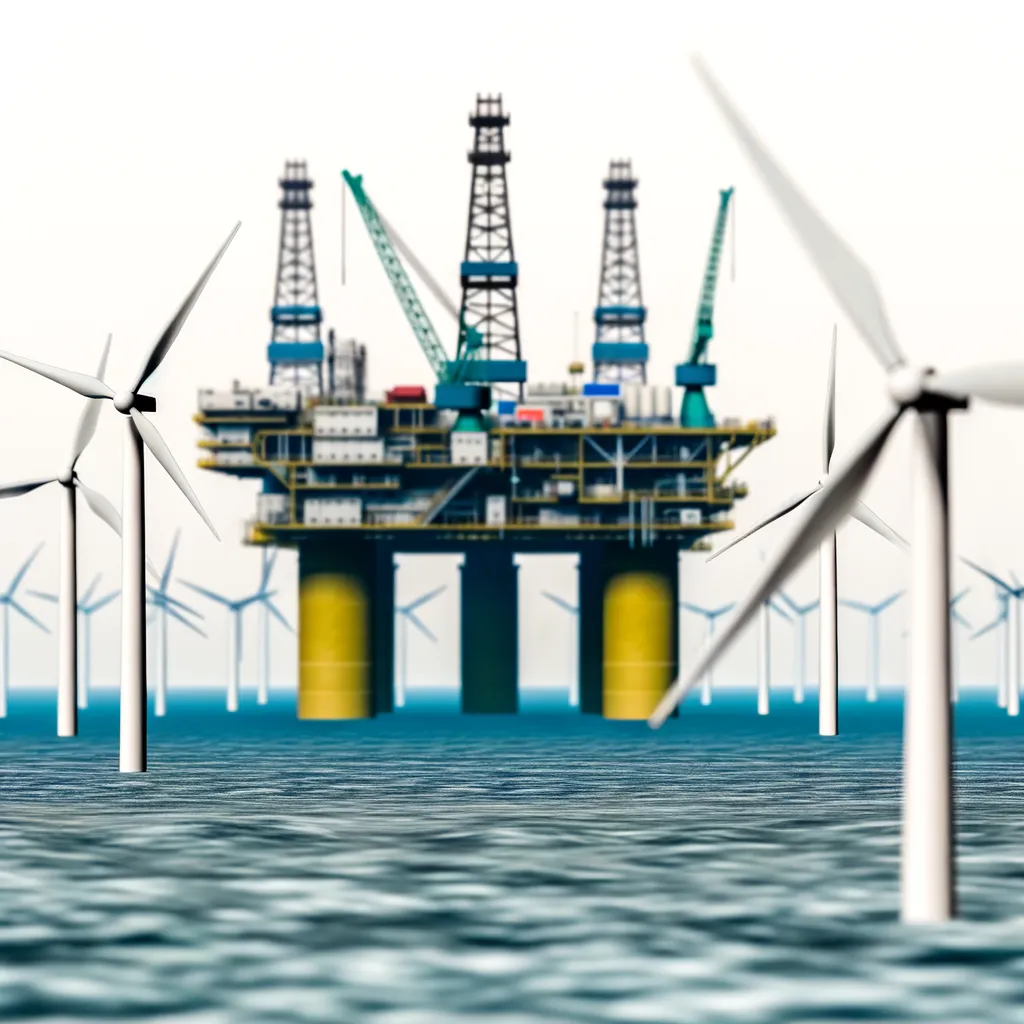
As awareness of climate change grows, the oil and gas industry faces the challenge of reducing its substantial carbon footprint. This article examines the strategies major companies are deploying to diminish their environmental impact, align with global climate goals, and advance a more sustainable energy future.
The Green Imperative
In recent years, the oil and gas industry has confronted mounting pressure to address its environmental impact. This pressure arises from a complex interplay of global environmental policies, shifting investor expectations, and an intensifying discourse around corporate responsibility in the face of climate change. Central to this evolving landscape is the Paris Agreement, an international treaty adopted in 2015, which aims to limit global warming to well below 2°C — and preferably to 1.5°C — above pre-industrial levels. The oil and gas sector, as a significant contributor to global greenhouse gas (GHG) emissions, finds itself at a critical juncture in contributing to these objectives.
The Paris Agreement sets a stark backdrop against which the industry's environmental strategies unfold. Committing to GHG emission reductions implies a fundamental shift in how fossil fuel companies operate. The imperative is not merely compliance; it is about remaining viable in a world demanding sustainable energy solutions. The industry's response has been multifaceted, ranging from investing in renewable energy sources to improving operational efficiency and deploying carbon capture technologies. There is a clear acknowledgment that the path to sustainability is a strategic requirement for long-term viability and social license to operate.
Beyond regulatory compliance, investor expectations have increasingly tilted toward environmental stewardship. This transition reflects a broader societal push toward sustainability, urging the oil and gas industry to reevaluate its role in a carbon-constrained world.
In response, major petroleum companies have begun adopting comprehensive strategies aimed at reducing their carbon footprint. These include efforts to reduce methane emissions, minimize routine flaring, and invest in carbon capture and storage (CCS) technologies. There is also increasing investment in renewable energy sources — such as wind and solar — to diversify energy portfolios and reduce dependency on fossil fuels.
A key component of these strategies has been the adoption of internal carbon pricing mechanisms. By assigning a cost to carbon emissions, companies create financial incentives to reduce GHG emissions across their operations. This tool reflects the external costs of emissions that are not typically captured in market prices and encourages a shift toward cleaner energy practices.
The industry has also seen a rise in partnerships and collaborations aimed at accelerating the green transition. These partnerships span governments, non-governmental organizations, and other sectors, creating a multi-stakeholder approach to tackling climate change. By sharing knowledge, technologies, and practices, the oil and gas sector can leverage collective expertise to achieve more significant environmental outcomes.
As the industry navigates the complexities of this transition, the path forward involves both challenges and opportunities. It requires balancing the world's near-term energy needs against long-term sustainability commitments. The shift in investor and societal expectations only hastens this transition, making it clear that the industry's future competitiveness depends on its ability to embrace and drive environmental innovation.
The strategies adopted to reduce the industry's carbon footprint are not solely about mitigating environmental impacts. They also represent opportunities in a rapidly changing energy landscape, marking a pivotal moment in the sector's history.
Methane Mitigation and Flare Reduction
A significant focus within the oil and gas industry's sustainability efforts is the reduction of GHG emissions, with particular emphasis on methane mitigation and flare reduction. Methane is a potent greenhouse gas; over a 100-year period its global warming potential is approximately 28–34 times that of carbon dioxide (IPCC AR6). This makes it a critical target for emissions reduction. Routine flaring — the burning of associated natural gas that cannot be processed or sold — also contributes substantially to carbon emissions, making its reduction another pivotal element of the industry's environmental strategy.
Major companies are adopting innovative approaches to tackle these issues, driven by environmental commitments, climate goals, and evolving investor expectations.
Methane Mitigation Strategies
Advanced Leak Detection and Repair (LDAR) Technologies: Companies are increasingly deploying technologies such as infrared cameras, optical gas imaging equipment, and unmanned aerial vehicles (UAVs) to identify methane leaks across their operations. These tools enable rapid detection of leaks, even in remote or difficult-to-access locations, facilitating timely repairs. Enhanced LDAR programs are critical in minimizing methane emissions from upstream and midstream operations.
Upgraded Equipment and Infrastructure: Replacing older, leak-prone equipment with newer, more efficient technologies is another key strategy. This includes the installation of low-emission valves, pneumatic controllers, and improved sealing systems designed to minimize methane leakage. Retrofitting existing infrastructure and ensuring new projects are built to higher emissions-control standards are essential steps in reducing methane losses.
Flare Reduction Initiatives
Gas Capture and Utilization: Companies are investing in technologies and infrastructure to capture natural gas that would otherwise be flared. Captured gas can be used for on-site power generation or processed for sale, reducing both flaring emissions and resource waste. Gas-to-power and gas-to-liquids projects are examples of beneficial utilization of what was previously considered waste gas.
Zero Routine Flaring Commitments: These commitments typically involve investment in gas capture, compression, and processing infrastructure to ensure that associated gas is either utilized on-site, sold, or reinjected. Progress toward these targets is generally reported through annual sustainability disclosures.
The impact of these strategies extends beyond direct emissions reductions. They also signal to regulators, investors, and the public that the industry is serious about confronting its environmental challenges. Methane mitigation and flare reduction are integral to the broader industry shift toward a lower-carbon future, including the electrification of upstream operations and the integration of renewable energy sources discussed in the following sections.
Electrification and Renewable Integration
Building on advances in methane mitigation and flare reduction, the petroleum industry is increasingly pursuing the electrification of upstream operations and the integration of renewable energy sources as a strategy for reducing its carbon footprint. This approach aims to reduce the environmental impact of oil and gas extraction while aligning with global sustainability targets. It involves powering operations with low-emissions electricity and incorporating renewable sources such as solar and wind into the energy mix.
Electrification of upstream operations involves replacing diesel- and gas-powered machinery with electric equivalents powered by grid electricity — provided that electricity is sourced from low-carbon or renewable generation. Companies are retrofitting existing infrastructure and designing new projects with electrification in mind, incorporating electrically driven compressors, electric drilling rigs, and electric vehicles for on-site operations. This transition presents challenges, particularly regarding the grid modifications needed to handle increased and variable demand from oil and gas operations. Developing a robust, flexible, and reliable grid that serves the specific needs of the sector — without shifting emissions elsewhere — is a significant engineering and policy challenge.
Integrating renewable energy sources directly into oil and gas operations offers a promising pathway. By establishing on-site solar or wind generation, companies can reduce their reliance on grid electricity and lower their indirect emissions. Advances in energy storage technologies — including battery systems and pumped hydroelectric storage — are playing an important role in managing the intermittent nature of renewable generation. These technologies enable the storage of surplus energy during peak generation periods for use when renewable output is insufficient.
The challenges associated with ensuring a reliable and clean energy supply for oil and gas operations are considerable. They include the capital investment required for renewable installations and grid upgrades, the technical complexity of integrating new energy sources into existing systems, and the regulatory landscape that can both enable and constrain such transitions. Innovations in grid technology, including smart grid systems, are aimed at improving the efficiency and flexibility of electricity distribution. Policy incentives and partnerships between energy companies, governments, and renewable energy providers are important for supporting the financial and logistical dimensions of the transition.
Successful electrification and renewable integration projects within the oil and gas industry can serve as a model for other sectors seeking to reduce their environmental impact. These initiatives demonstrate the industry's commitment to sustainability and contribute to the broader goal of transitioning to a low-carbon economy.
Carbon Capture, Utilization, and Storage (CCUS)
Building on the momentum generated by electrification and renewable integration, the industry is increasingly focusing on Carbon Capture, Utilization, and Storage (CCUS) technologies as a pivotal component of its sustainability strategy. CCUS serves as a critical bridge between the current reliance on fossil fuels and a lower-carbon energy future, offering a pathway to significantly reduce CO₂ emissions from refineries and processing plants.
Understanding CCUS
CCUS encompasses a suite of technologies designed to capture carbon dioxide emissions at their source, preventing them from entering the atmosphere. Once captured, CO₂ can either be utilized in various industrial processes or permanently stored underground in suitable geological formations. The adoption of CCUS by major oil and gas companies reflects both a commitment to reducing environmental impact and a strategic alignment with global carbon reduction targets.
Ongoing Projects and Advancements
Several landmark CCUS projects have been developed in recent years. The Sleipner project in Norway is a pioneering example in which CO₂ is separated from natural gas during production and stored in a sub-seabed saline aquifer. This project has demonstrated the long-term technical feasibility and safety of geological CO₂ storage. In the United States, the Petra Nova project (2017–2020) demonstrated how carbon capture technology can be retrofitted to existing industrial facilities, though the project was subsequently shut down.
Development of novel solvents and solid sorbents that require less energy for regeneration is making CCUS more economically competitive. The utilization of captured CO₂ in applications such as enhanced oil recovery (EOR), construction materials, and the production of synthetic fuels creates value-added opportunities that further incentivize adoption.
Economic and Regulatory Factors
The economic viability of CCUS projects is heavily influenced by carbon pricing mechanisms, government incentives, and regulatory frameworks.
Regulatory frameworks also play a crucial role in ensuring the safe and effective storage of CO₂. Stringent regulations are required to manage potential risks associated with CO₂ transportation and long-term geological storage. The development of robust legal and regulatory frameworks that address liability, monitoring, and verification is essential for the broader acceptance and deployment of CCUS technologies.
Integrating CCUS within the Industry's Sustainability Strategy
As the oil and gas industry pivots toward sustainability, integrating CCUS into its carbon management strategy is becoming increasingly important. By capturing CO₂ at the source and either utilizing it in other industrial processes or safely storing it underground, the industry can meaningfully reduce its environmental impact. This approach not only supports alignment with global carbon reduction targets but also positions the industry as a contributor to the transition toward a low-carbon future.
The incorporation of CCUS technologies, combined with the expansion into hydrogen — particularly blue and green hydrogen — underscores the multifaceted approach the petroleum industry is adopting to navigate the green transition.
Widening the Hydrogen Horizon
In the effort to decarbonize the petroleum industry, hydrogen has emerged as a significant energy carrier, particularly through the pathways of blue and green hydrogen. These forms of hydrogen offer a route to reducing the carbon footprint of oil and gas operations, complementing the advances in CCUS discussed previously. The integration of low-emissions hydrogen into refinery operations and its potential for broader industrial and transportation applications represents a meaningful shift toward sustainability within the sector.
Green hydrogen, produced via electrolysis powered by renewable energy, generates no CO₂ during production. This makes it a key element of the industry's long-term decarbonization strategy. Blue hydrogen, produced from natural gas with the associated CO₂ captured and stored or reused, offers a nearer-term pathway that leverages existing gas infrastructure and CCUS capabilities. Both hydrogen pathways play important roles in reducing the environmental impact of refinery operations, given their potential to replace or supplement carbon-intensive processes.
Integrating green hydrogen into refinery operations could significantly alter the traditional oil and gas landscape. Using green hydrogen for hydrocracking and desulfurization — processes that currently rely on hydrogen produced from fossil fuels — can reduce the carbon intensity of refined products and improve overall energy efficiency. Refineries can use green hydrogen as a direct process feedstock, lowering the carbon intensity of fuels and petrochemical products.
Blue hydrogen presents a more immediate opportunity to reduce the carbon emissions associated with the large volumes of hydrogen already consumed in refining and chemical manufacturing. By capturing and storing or utilizing the CO₂ produced during hydrogen generation, the oil and gas industry can make substantial progress in reducing its emissions profile. This approach also supports the development of hydrogen as a versatile energy carrier, capable of transforming natural gas resources into a cleaner fuel for power generation, heating, and transportation.
The broader implications for industrial and transportation sectors are significant. Hydrogen can serve as a clean fuel for hard-to-abate industries such as steel, cement, and chemicals, which require high-temperature heat that is difficult to supply through electrification alone. In the transportation sector, hydrogen fuel cells offer an alternative to battery-electric technology, particularly for long-haul trucking, maritime shipping, and aviation, where energy density and refueling time are critical.
The transportation of hydrogen — whether through pipeline networks adapted from natural gas infrastructure or via liquefaction and shipping — draws on the existing logistics expertise of the oil and gas industry. This synergy suggests that the sector's infrastructure and operational knowledge can be adapted to support a hydrogen economy, facilitating a more manageable transition from hydrocarbons to hydrogen.
Scaling up green and blue hydrogen will require significant investment in renewable energy capacity, electrolyzer technology, CCUS infrastructure, and hydrogen-specific distribution systems such as pipelines and fueling stations. Regulatory frameworks and market incentives are critical to accelerating these developments, alongside technological innovations that reduce the cost of hydrogen production, distribution, and end use.
Central to this transition is collaboration among governments, industry, and the research community to address technical challenges, economic viability, and policy alignment. Establishing standards for low-carbon hydrogen production, ensuring safety in hydrogen handling and transport, and fostering international cooperation for a global hydrogen market are pivotal steps in realizing hydrogen's potential to contribute to a sustainable energy future.
Conclusions
The oil and gas industry's journey toward sustainability is marked by both innovation and commitment. Through a combination of methane reduction, renewable energy integration, and advanced carbon capture, the sector demonstrates that even carbon-intensive industries can make meaningful contributions to a lower-carbon planet.