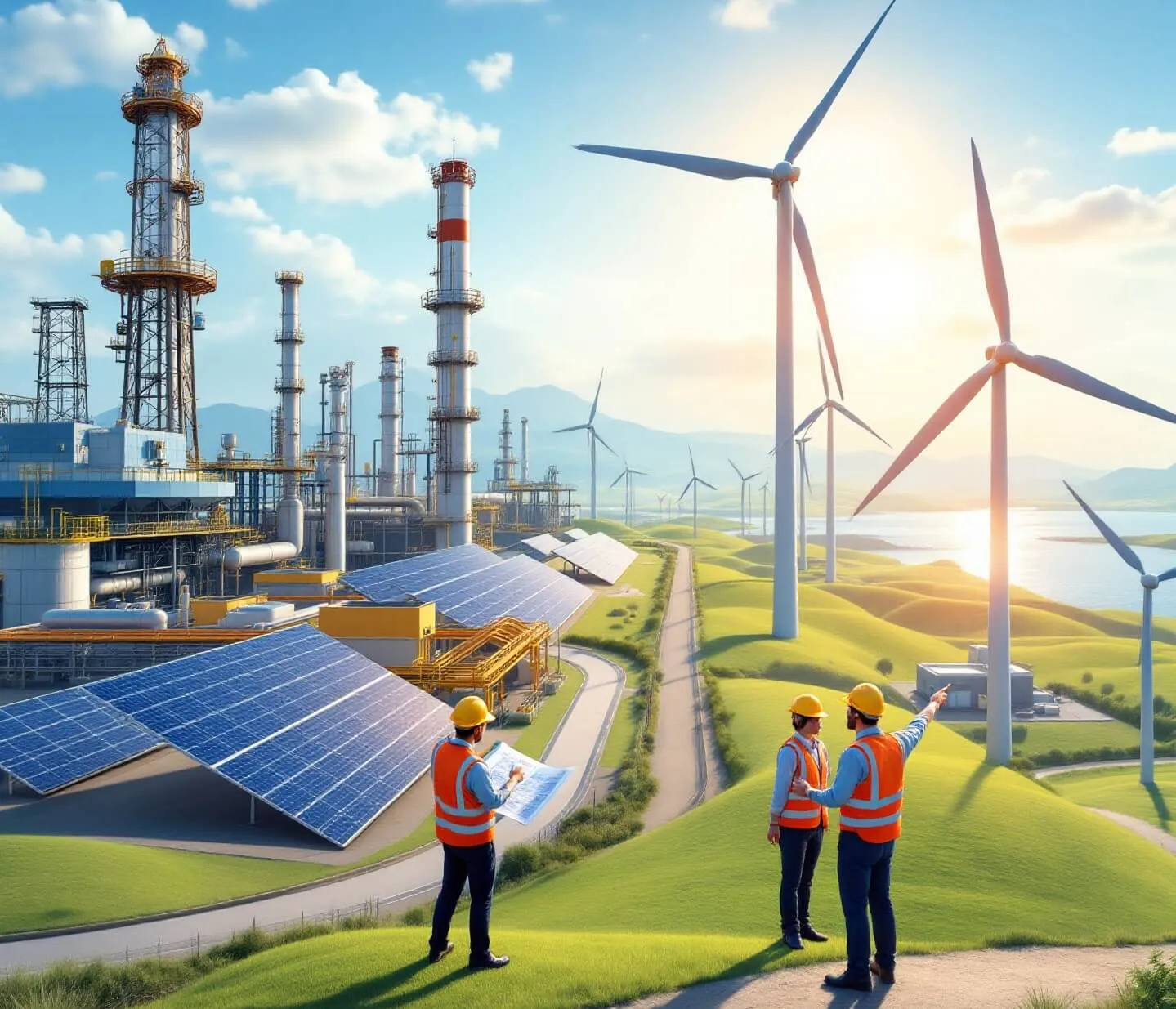
Sustainability pressure isn't theoretical anymore. It shows up in regulation, in investor calls, in the permits a company needs to keep operating. Oil and gas sits right in the middle of it. Regulatory pressures, investor demands, and societal expectations for cleaner energy are all intensifying. So companies across the sector are pulling renewables into their operations and their business models. That matters for climate targets — and it matters for whether these companies have a long-term future at all.
Integrating Renewables into Operations
Investment in Renewable Projects
Oil and gas companies are diversifying their portfolios, moving money into wind, solar, and bioenergy projects. Large-scale solar farms. Offshore wind. The skills transfer is real, not marketing: these companies have spent decades managing massive infrastructure and complex energy systems. Reservoir characterisation, project finance, subsea logistics — that cross-sector know-how gives them a credible position in competitive renewable markets.
Utilizing Existing Infrastructure
Why build new when you already own the acreage, the wells and the data? Depleted oil and gas fields can be repurposed for carbon capture and storage (CCS), leaning on existing seal integrity and subsurface characterisation. Geothermal energy extraction is a separate pathway, and it only works in suitable geological settings where subsurface heat resources are present. Each route needs its own technical and economic evaluation — they don't share a business case. Run this way, the assets do double duty: lower carbon footprint, less environmental impact, and full use of the logistical networks — pipelines, offshore platforms, subsurface data — that took decades to build.
Transforming Business Models
Diversification Strategies
Fossil fuel reserves are finite. That's the driver behind diversification strategies that make renewables a core part of the business rather than a side project. Shifting capital. Acquiring renewable technology companies. Forming strategic partnerships to build new capabilities. How fast and how deep a company goes varies a lot — size, geography, and existing asset base all factor in.
Embracing Technological Innovation
Hydrogen production, battery storage, energy-efficient process design — oil and gas firms are driving innovation in all three. R&D investment creates new revenue streams and sharpens competitiveness in the clean energy space. Low-carbon hydrogen produced via electrolysis powered by renewables is one route where upstream operators can apply electrical infrastructure and project management skills they already have. Steam methane reforming paired with CCS is a different animal: a downstream/midstream pathway, different technical expertise, and typically deployed at refining or dedicated hydrogen production facilities.
Commitment to Sustainability Goals
Setting Emission Reduction Targets
These commitments drive renewable integration, since companies are aligning with frameworks such as the Paris Agreement. Scope 1 and Scope 2 emission reductions are generally the near-term focus. Scope 3 pathways remain harder to define and harder to execute.
Reporting and Transparency
Enhanced reporting on environmental, social, and governance (ESG) metrics is becoming standard practice. Transparent sustainability efforts build stakeholder trust and demonstrate accountability toward low-carbon goals.
Challenges and Opportunities
Overcoming Economic Hurdles
Renewable infrastructure carries a hefty upfront capital bill. For oil and gas operators, though, the hard part is usually capital allocation — balancing near-term hydrocarbon cash flows against longer-horizon renewable returns — not technology availability.
Navigating Regulatory Environments
Regulations differ region to region, and keeping pace with them is an operational job in its own right. Permitting. Compliance requirements. Policy shifts. Teams need strategies that can move quickly, and stakeholders who stay engaged. In some jurisdictions, regulatory uncertainty delays final investment decisions on both CCS and large-scale renewable projects.
Case Studies
Equinor's Offshore Wind Ventures
Offshore engineering and project management are the bridge. Equinor is transitioning from a predominantly oil and gas operator toward a broader energy company.
Shell's Renewable Energy Investments
Conclusion
Oil and gas companies integrating renewables — that's a genuine transformation toward a lower-carbon future, not a rebrand. It comes down to strategic capital allocation, technological innovation, and a hard reassessment of traditional business models. Economic and regulatory challenges remain real. But the move toward renewables presents meaningful opportunities for growth and long-term resilience.
By bringing renewables in, oil and gas companies aren't just answering external pressure. They're shaping the future of energy on their own terms. Competitiveness and relevance now depend on it, in a world that keeps redefining what sustainability and environmental responsibility mean.
Editor's note: the approved draft as supplied contained no fenced json metadata block, so none was carried over. If one exists, send it and I'll append it verbatim.