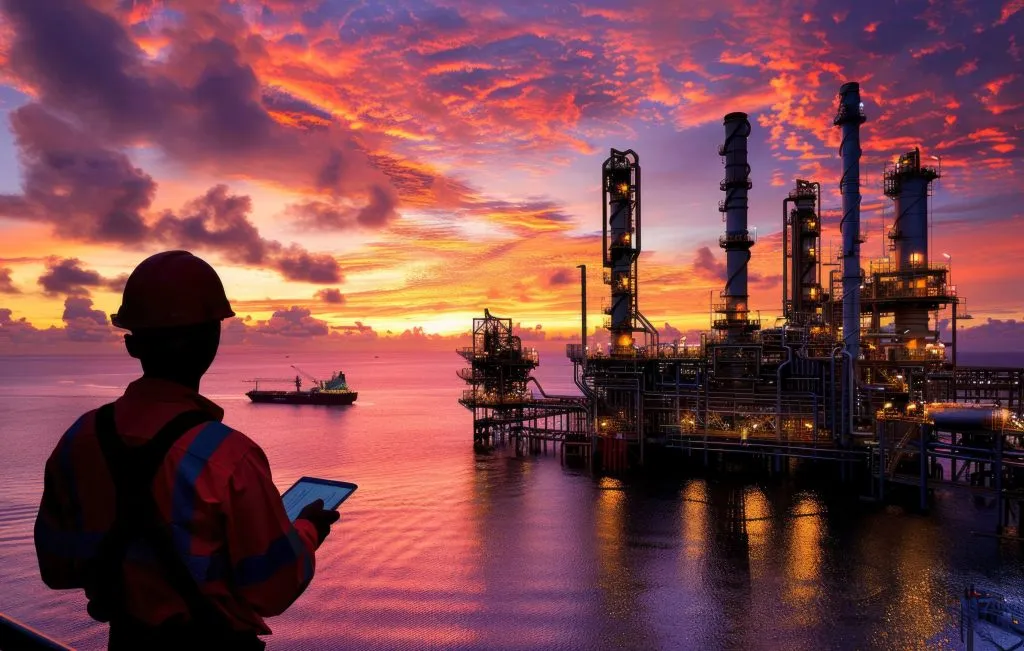
Natural gas now sits in a contested spot in the global energy system. Countries have binding emissions commitments, and the fuel's role as a so-called "bridge" to a renewable future is getting picked apart from two directions at once — engineering and policy. This article looks at the technical realities, the environmental trade-offs, and the strategic pathways that will shape natural gas in a low-carbon economy.
The Current State of Natural Gas
Per unit of energy, gas emits less carbon dioxide than coal or oil. That single number has made it attractive to countries trying to cut their carbon footprint while keeping energy security and grid reliability intact.
Key Benefits of Natural Gas
Natural gas holds several distinct engineering advantages as a transitional fuel. Burning methane puts less CO₂ into the flue gas than coal or oil per unit of energy — a direct consequence of the higher hydrogen-to-carbon ratio of methane (CH₄). Gas-fired plants also offer fast-ramping capability, enabling operators to respond to fluctuations in load and to complement the variable output of wind and solar generation.
Natural Gas in the Energy Transition
Bridge or Barrier?
Calling gas a "bridge fuel" still starts arguments among engineers, economists, and environmental advocates. Proponents point to its dispatchability, and to the plain difficulty of replacing firm generation capacity with intermittent renewables on short timescales. Critics argue that long-lived infrastructure — pipelines, LNG terminals, and power stations — creates path dependencies that can slow the build-out of zero-carbon alternatives and complicate emissions accounting over asset lifetimes.
Role in Grid Stability
As renewable penetration increases, the technical requirement for flexible, dispatchable generation becomes more pronounced. Natural gas peakers and CCGTs can respond quickly to changes in net load, providing frequency regulation and capacity reserves that battery storage alone cannot yet fully supply at grid scale. This balancing role is likely to remain relevant in many markets through the medium term, even as storage technology matures.
Technological Innovations and Solutions
Carbon Capture and Storage
Most engineers treat carbon capture and storage (CCS) as a prerequisite if natural gas is to retain a significant role in a deeply decarbonised energy system. Post-combustion capture systems applied to gas-fired power plants can capture 85–95% of CO₂ from flue gas, but parasitic energy loads (typically 20–30% of net plant output) substantially reduce the net CO₂ avoidance. That energy penalty has to be built into any honest assessment of overall emissions performance. Three things still block broad deployment: cost reduction, long-term geological storage integrity, and the regulatory frameworks for CO₂ transport and injection.
Blue and Green Hydrogen
The existing natural gas network and reforming infrastructure offer a potential foundation for hydrogen production. "Blue hydrogen" is produced via steam methane reforming (SMR) or autothermal reforming (ATR) of natural gas, with CCS applied to capture the associated CO₂. "Green hydrogen" is produced by electrolysis of water using renewable electricity. Both pathways are under active development, and the suitability of existing gas infrastructure for hydrogen service — covering issues such as embrittlement, seal compatibility, and Wobbe index — is a subject of ongoing engineering assessment.
Regional Perspectives and Policies
European Union's Approach
There is no single European gas policy. The European Union has adopted a differentiated approach to natural gas within its broader decarbonisation strategy. Member states vary considerably in their reliance on gas and in the pace at which they are developing alternatives.
Asian Markets
The trajectory of gas demand in Asia will be a significant determinant of global LNG trade volumes in the coming decades.
Environmental Considerations
Methane Emissions
Methane escapes all along the chain — from wellhead through gathering, processing, transmission, and distribution. Methane is a potent greenhouse gas with a global warming potential approximately 80–86 times that of CO₂ over a 20-year horizon (IPCC AR6), and approximately 28–34 times over 100 years. Which horizon you choose changes the emissions accounting, and the climate impact assessment, considerably.
Water Resources
Water is a recurring pressure point wherever gas is developed. These concerns vary considerably by geology and regulatory jurisdiction, and their management is an ongoing requirement for maintaining the industry's licence to operate.
Economic Implications
Investment Trends
Capital allocation decisions are being influenced by considerations of asset longevity relative to energy transition timelines, carbon pricing risk, and the availability of lower-carbon alternatives. Projects with strong emissions performance and credible decarbonisation pathways are generally better positioned to attract financing.
Job Market Evolution
The energy transition will require active workforce planning — retaining and redeploying skills in areas such as process engineering, pipeline integrity, instrumentation, and project management that are transferable to hydrogen, CCS, and other emerging energy infrastructure.
Future Scenarios and Recommendations
Policy Framework
Effective integration of natural gas in a low-carbon economy requires policy frameworks that:
- Set clear and enforceable emissions reduction trajectories
- Provide stable incentives for CCS and clean hydrogen development
- Establish robust methane emissions monitoring and reporting requirements
- Define credible timelines for transitioning gas infrastructure to low-carbon service
Industry Adaptation
To remain relevant in a decarbonising energy system, the natural gas industry should focus on:
- Implementing rigorous LDAR programmes to minimise methane emissions
- Advancing CCS integration at gas processing and power generation facilities
- Assessing and adapting existing infrastructure for hydrogen compatibility
- Engaging constructively with regulators on emissions standards and transition planning
Conclusion
The role of natural gas in a low-carbon economy is neither straightforward nor uniform across geographies. Its engineering attributes — dispatchability, energy density, and existing infrastructure — give it a functional role in the near-to-medium term energy transition. Its long-term position will be determined by the pace of renewable and storage deployment, the commercial maturity of CCS, the development of hydrogen supply chains, and the stringency of methane emissions regulation.
The most credible path forward involves a managed evolution of the natural gas sector: reducing emissions intensity across the supply chain, integrating with low-carbon technologies, and progressively repositioning infrastructure toward hydrogen and other clean energy carriers. This requires coordinated action from engineers, operators, policymakers, and investors, grounded in technical realism rather than either uncritical promotion or wholesale dismissal of the fuel's transitional value.