Preventative Maintenance of Electrical Equipment in Hazardous Locations
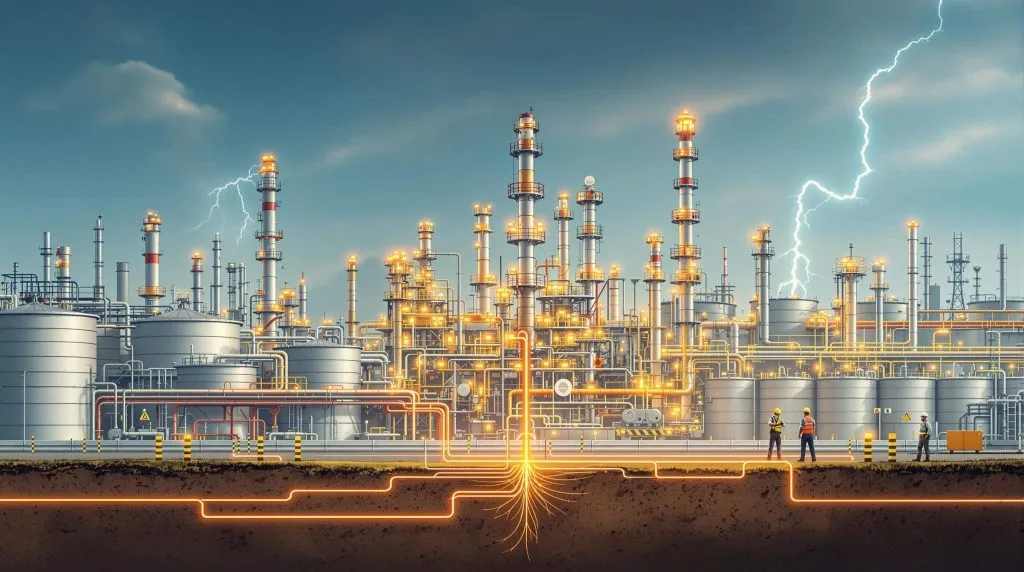
An electrical failure in a classified hazardous area is not just an availability issue. It can be an ignition event. A corroded conduit seal, a cracked flameproof enclosure, a loose terminal in an intrinsically safe loop — any one of them can put a flammable atmosphere and an ignition source one step closer together. When that gap closes, the financial and human cost is severe enough that most operating companies treat hazardous-area electrical maintenance as safety-critical work, not a routine cost line.
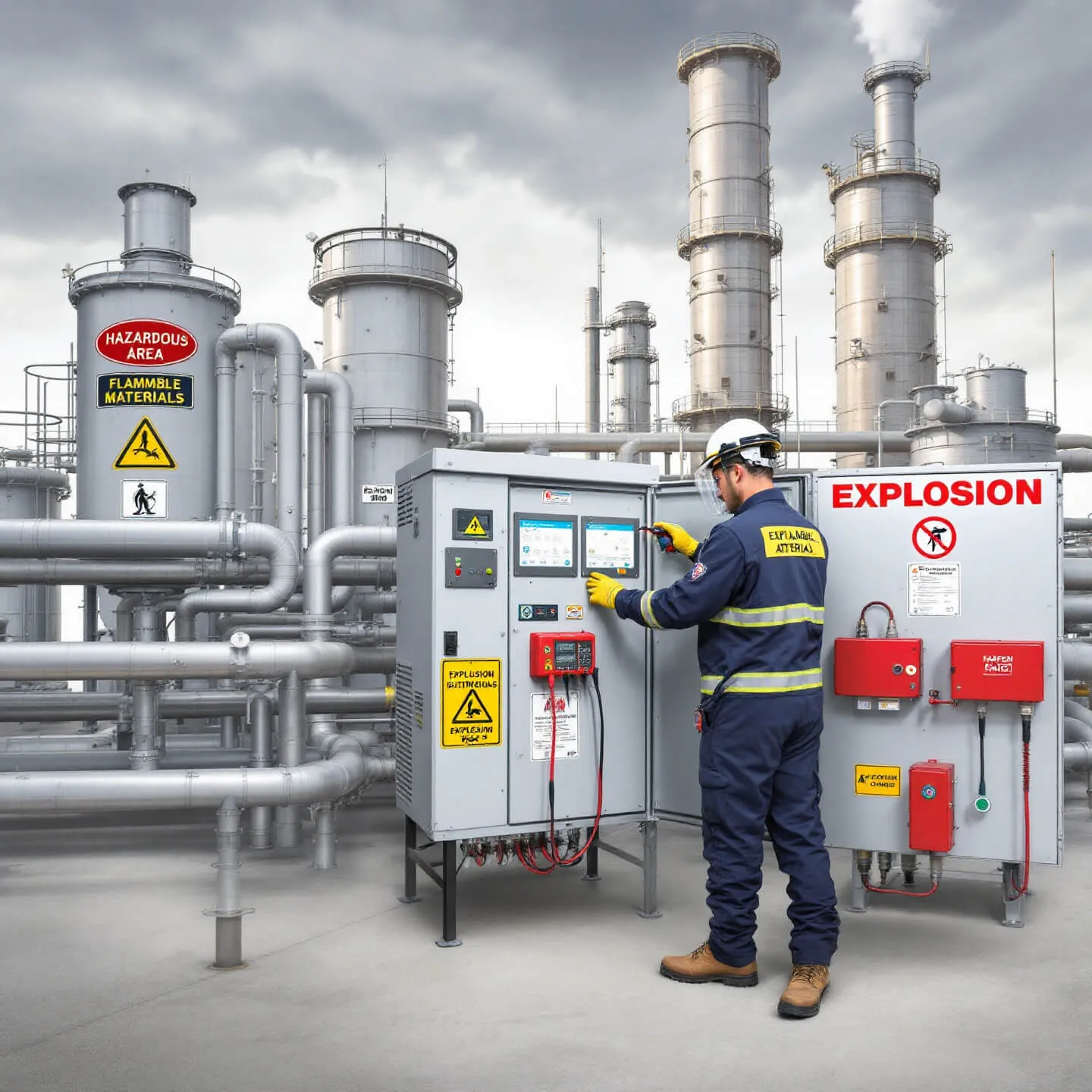
But inspection intervals slip. Documentation ages. Technicians trained on one protection concept get sent to work on another without proper re-familiarisation. This article sets out a structured, standards-aligned approach to preventative maintenance (PM) of hazardous-area electrical equipment. It covers the regulatory baseline, protection-concept-specific tasks, practical inspection discipline, and the decisions maintenance leads and procurement teams face in practice.
Standards and Regulatory Baseline
The primary international standard governing inspection and maintenance of electrical installations in explosive atmospheres is IEC 60079-17, Explosive Atmospheres – Part 17: Electrical Installations Inspection and Maintenance. It defines inspection grades, minimum content of inspection records, and the competency requirements for personnel performing the work. Companion standards cover design and installation: IEC 60079-14 covers initial installation, and the broader IEC 60079 series addresses each protection concept in detail.
In North American jurisdictions, the NEC (NFPA 70) and associated NFPA standards classify locations by Division or Zone and specify equipment suitability. Where both IEC Zone and NEC Division systems coexist on a facility — common on export-oriented projects — the maintenance programme must reconcile both classification schemes. Equipment certified under one system must not be swapped for equipment certified only under the other.
IEC 60079-17 establishes three grades of inspection:
- Visual inspection — checks that are apparent without the use of tools, such as obvious physical damage, missing bolts, or label legibility.
- Close inspection — includes visual checks plus those requiring access, such as opening an enclosure to verify terminal tightness, but not live testing.
- Detailed inspection — encompasses close inspection plus tests and measurements, such as insulation resistance testing or verification of intrinsic safety parameters.
The right inspection interval for a specific installation depends on the equipment type, protection concept, environmental severity, the facility's operational history, and risk assessment. IEC 60079-17 requires that intervals be justified and documented, not that they conform to a fixed maximum duration. Review and adjust intervals based on findings. If repeated inspections reveal deterioration, shorten the interval. Do not simply note it and move on.
Protection-Concept-Specific Maintenance Tasks
Different protection concepts fail in fundamentally different ways. A PM programme that applies one generic checklist across all Ex equipment will miss the critical items for each concept.
Flameproof Enclosures (Ex d)
A flameproof enclosure lives or dies by its flame paths — the precisely machined gaps at joints, cable entries, and shaft penetrations. Corrosion, mechanical damage, or non-approved sealants on these surfaces can widen gap tolerances beyond the certified limits. That allows a flame to propagate outward and ignite the surrounding atmosphere.
Key PM tasks:
- Inspect all flame-path surfaces for corrosion, pitting, scoring, or contamination. Any damage that alters the machined surface must be assessed against the original certification drawings before the enclosure is returned to service.
- Verify that all bolts are present, of the correct grade, and torqued. Missing or substituted fasteners are a common finding and directly compromise the enclosure's ability to contain an internal explosion.
- Check that cable glands are of the certified type, correctly installed, and that unused entries are blanked with certified plugs.
- After any opening for maintenance, confirm that no tools, rags, or foreign objects have been left inside before re-securing. Re-verify bolt torque on closure.
- Do not apply non-approved thread compounds or sealants to flame paths. Only materials explicitly permitted by the certification documentation may be used.
Intrinsically Safe Circuits (Ex i)
Intrinsic safety works by limiting the electrical energy in a circuit to below the ignition threshold of the surrounding atmosphere. That protection is destroyed if the circuit is modified, if barriers or associated apparatus are replaced with non-certified equivalents, or if cable parameters (capacitance, inductance, resistance) exceed the certified entity parameters.
Key PM tasks:
- Verify that Zener barriers or galvanic isolators carry current certification and that their entity parameters remain compatible with the field device and interconnecting cable. Entity parameter compatibility must be documented and re-verified whenever any component is replaced.
- Inspect cable routing to confirm that intrinsically safe conductors remain segregated from non-intrinsically safe wiring. Segregation requirements are defined in
IEC 60079-14and must be maintained throughout the life of the installation. - Check that blue-coded terminals and conduits (the conventional identification for IS circuits) have not been disturbed or intermixed with other circuits during unrelated maintenance activities.
- Test earth continuity of barrier earth connections. A high-resistance or open earth path in a Zener barrier renders the protection concept ineffective.
Increased Safety (Ex e)
Ex e equipment relies on the absence of sparks and arcs under normal operation, combined with tighter construction tolerances that reduce the risk of ignition from overheating or accidental contact. The critical failure modes are loose terminals (which create resistance heating), ingress of moisture or contamination, and degradation of enclosure IP rating.
Key PM tasks:
- Check terminal tightness at each close or detailed inspection. Terminals that have loosened under thermal cycling represent a direct heat source inside the enclosure.
- Inspect gaskets and seals for compression set, cracking, or chemical attack. A degraded gasket that allows moisture ingress into an Ex e terminal box can create tracking paths that lead to arcing — the very condition the protection concept is designed to prevent.
- Verify that cable entries maintain the IP rating of the enclosure. Incorrectly sized glands or missing lockrings are common findings.
Purged and Pressurised Equipment (Ex p)
Purge-and-pressurisation systems exclude the flammable atmosphere from the enclosure by maintaining a positive internal pressure with a protective gas. The protection fails if the purge sequence is bypassed, if the pressure interlock is defeated, or if the supply gas is contaminated.
Key PM tasks:
- Function-test the purge-before-energise interlock and the low-pressure shutdown at each detailed inspection interval.
- Inspect the protective gas supply for dew point, contamination, and adequate pressure margin above the minimum certified operating pressure.
- Check all vent and drain paths for blockage. A blocked vent can cause pressure buildup; a blocked drain can allow liquid accumulation inside the enclosure.
Inspection Records and Competency
IEC 60079-17 is explicit that inspection records must be retained and must be sufficient to demonstrate the history of the installation. At a minimum, records should capture the inspection grade performed, the date, the identity of the inspector, the findings, and the corrective actions taken. Deficiencies found but not immediately corrected must be tracked to closure with a defined timeline based on risk.
Personnel performing inspections must be competent in the relevant protection concepts. The standard distinguishes between the level of knowledge required for visual inspection versus detailed inspection.
Illustrative Scenario
The following is illustrative and does not represent a specific documented incident.
Consider a production platform where a close inspection of a flameproof junction box in a Zone 1 area reveals that two of the eight lid bolts have been replaced with carbon steel fasteners of the wrong grade — likely during a previous maintenance event where the correct stainless fasteners were not available on the shelf. The flame-path gap is within tolerance, but the substituted bolts have already begun to corrode, and their reduced tensile strength means the lid cannot achieve the required clamping force under an internal explosion event.
The correct response is to place the circuit out of service, replace all fasteners with the certified type and grade, re-inspect the flame path, and update the equipment record. The incorrect response — which happens in practice — is to note the finding, defer the repair, and continue operating. A deferred finding on a safety-critical item must carry a defined risk acceptance sign-off, not a maintenance backlog entry.
Practical Maintenance Checklist
Use the following as a minimum framework, adapted to site-specific certification documentation:
Before any inspection or maintenance on Ex equipment:
- [ ] Confirm area classification and equipment protection concept from the area classification drawing and equipment schedule.
- [ ] Obtain a permit to work. For any work requiring opening of live or energised equipment, apply full LOTO, verify zero energy state, and confirm gas-free conditions with calibrated gas detection equipment.
- [ ] Assemble the relevant certification documentation (Ex certificate, installation drawing, entity parameters for IS circuits).
During inspection:
- [ ] Verify equipment marking matches the installed certification (Ex marking, T-class, gas group).
- [ ] Check physical integrity: enclosure damage, corrosion, missing fasteners, cable entry condition.
- [ ] Confirm IP rating maintenance: gasket condition, unused entry blanks, gland lockrings.
- [ ] For Ex d: inspect flame paths for damage or contamination; verify all fasteners are correct grade and fully engaged.
- [ ] For Ex i: verify entity parameter compatibility; confirm IS segregation is intact; test barrier earth continuity.
- [ ] For Ex e: check terminal tightness; inspect for moisture ingress.
- [ ] For Ex p: function-test pressure interlocks; verify purge gas quality.
Documentation:
- [ ] Record all findings against the equipment tag number.
- [ ] Classify deficiencies by severity and assign corrective action deadlines.
- [ ] Update the inspection history in the maintenance management system.
- [ ] Review whether findings warrant shortening the next inspection interval.
Conclusion
Preventative maintenance of hazardous-area electrical equipment is a structured discipline. It is grounded in IEC 60079-17 and the protection-concept-specific standards of the IEC 60079 series. The core obligations are straightforward: inspect at defined intervals, use competent personnel, maintain complete records, and close deficiencies within a risk-justified timeframe.
The practical failures that lead to incidents are equally straightforward: deferred repairs, substituted components, undocumented modifications, and inspection programmes that treat all Ex equipment as interchangeable. Maintenance leads should audit their current programmes against the three inspection grades defined in IEC 60079-17 and confirm that their technicians hold verifiable competency in the protection concepts they are inspecting. Procurement teams should establish approved parts lists for Ex-certified fasteners, glands, blanks, and barriers before maintenance windows open — not during them.
The next concrete step is a gap assessment: pull the last three inspection records for a sample of Ex equipment across each protection concept present on site, and check whether the inspection grade performed matches what the equipment's risk profile demands.