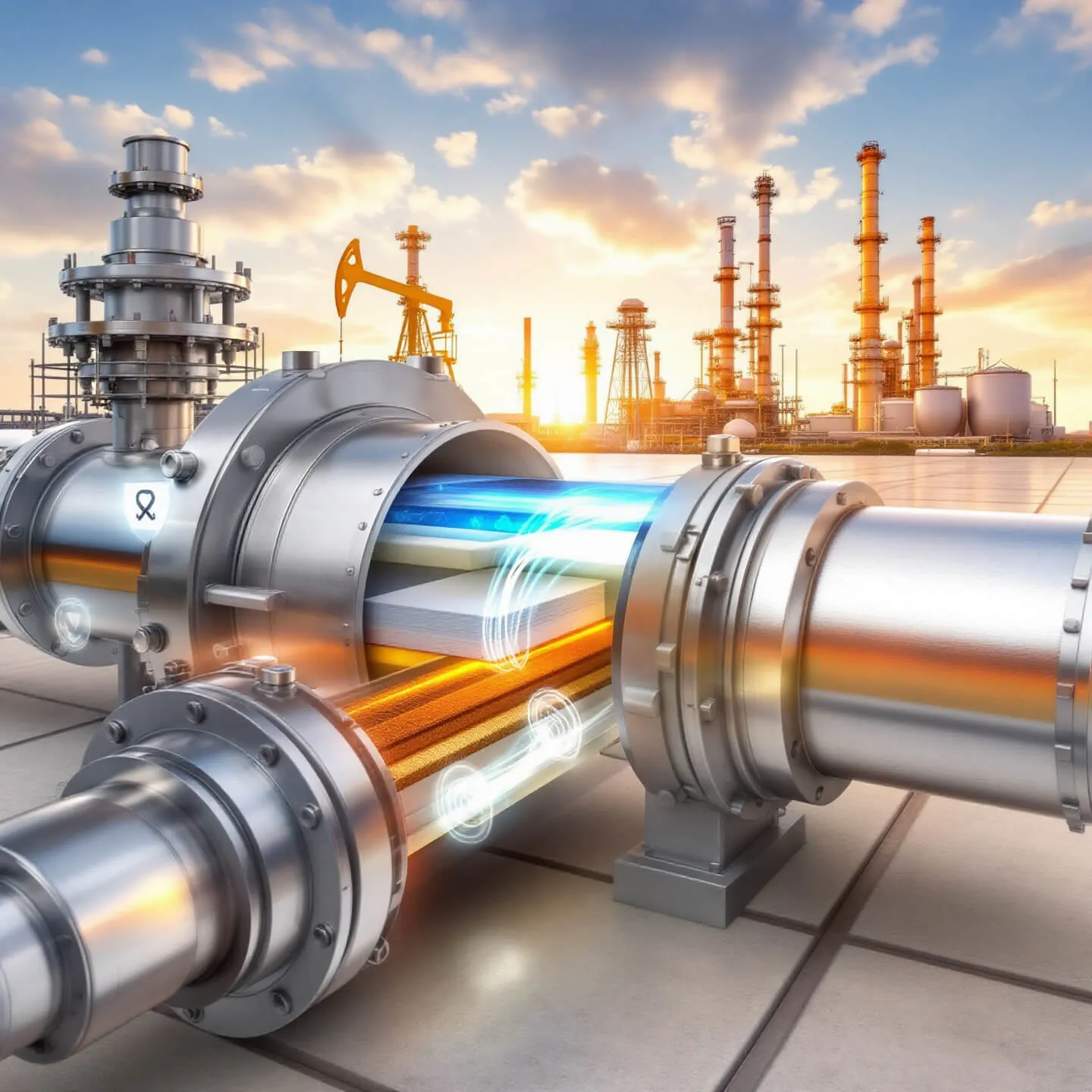
This article covers the main ways to prevent and manage corrosion in mechanical components, focusing on oil and gas service.
Understanding Corrosion
Corrosion is what happens when a material—usually metal—degrades over time through chemical or electrochemical reactions with its surroundings. On mechanical equipment, it shows up in several forms. Each one attacks integrity and function differently.
Types of Corrosion in Mechanical Equipment
- Uniform Corrosion: Metal loss spread evenly over the exposed surface.
- Pitting Corrosion: Localized attack that digs small holes or pits. Often hard to spot visually.
- Crevice Corrosion: Starts in stagnant micro-environments—gaps, joints, under gaskets.
- Galvanic Corrosion: Caused by electrical contact between dissimilar metals in a conductive electrolyte.
- Stress Corrosion Cracking: Happens when tensile stress and a corrosive environment act together.
Factors Contributing to Corrosion
- Environmental Conditions: Humidity, temperature, and corrosive agents like hydrogen sulfide, carbon dioxide, acids, or chloride salts—all common in oil and gas service.
- Material Properties: How susceptible a metal is depends on chemical composition and microstructure.
- Mechanical Stress: Applied or residual forces can speed up corrosion, especially stress corrosion cracking.
- Electrochemical Reactions: Metals naturally tend to oxidize when exposed to certain environments and electrolytes.
Corrosion Control Strategies
Good corrosion control is a mix of prevention and management, matched to the equipment, service fluid, and operating environment.
Material Selection
Pick the right material first. That is the first and most fundamental line of defense against corrosion.
- Corrosion-Resistant Materials: Use stainless steel, duplex stainless steel, nickel alloys, titanium, or other alloys qualified for corrosive service conditions.
- Compatibility: Check materials that touch each other. Avoid galvanic couples that would accelerate corrosion of the less noble metal.
Protective Coatings
A protective barrier keeps corrosive agents away from equipment surfaces.
- Paints and Epoxies: Organic coatings that form a physical barrier between substrate and environment. Surface prep quality drives coating adhesion and performance.
- Metal Coatings: Hot-dip galvanizing (zinc coating), thermal spray, or cladding with corrosion-resistant alloys.
- Ceramic Coatings: Good for high-temperature resistance and chemical attack in aggressive process environments.
Cathodic Protection
This is a well-established electrochemical method. It suppresses the anodic reactions that cause corrosion.
Sacrificial Anodes: Attach a more electrochemically active material—typically zinc, magnesium, or aluminum. It corrodes preferentially and protects the base metal. Best in aqueous or buried environments where anode and cathode connect electrically through an electrolyte. Less economical for atmospheric or dry storage.
- Impressed Current Systems: Use an external DC power source to supply protective current, shifting the structure's electrochemical potential into the immune or passive region.
Corrosion Inhibitors
These are chemicals added to process fluids to cut the corrosion rate on metallic surfaces.
- Anodic Inhibitors: Form a protective passive oxide layer on the metal, reducing anodic dissolution. Caution: keep anodic inhibitors at or above the critical inhibitor concentration. If concentration drops below that threshold, localized pitting can accelerate fast. Continuous monitoring of inhibitor concentration and pH is essential in service.
- Cathodic Inhibitors: Slow the cathodic reaction, limiting reactants to corrosion sites.
- Mixed Inhibitors: Protect at both anodic and cathodic areas at the same time.
Environmental Control
Change the process or storage environment so it is less corrosive.
- Dehumidification: Keep moisture in storage and equipment enclosures below the critical relative humidity for corrosion initiation.
- Temperature Control: Keep operating temperatures within design limits to slow electrochemical reaction rates.
- pH Adjustment: Regulate acidity or alkalinity of fluids in contact with equipment to minimize corrosive attack.
Design Modifications
Engineer geometry and configuration to reduce corrosion potential from the start.
- Eliminate Crevices: Use smooth, continuous designs that stop corrosive agents from collecting in stagnant zones.
- Drainage Provisions:
- Uniform Stress Distribution: Design features that reduce stress concentrations, lowering susceptibility to stress corrosion cracking and corrosion fatigue.
Regular Inspection and Maintenance
Proactive monitoring catches corrosion before it compromises equipment integrity.
- Non-Destructive Testing (NDT):
- Regular Cleaning: Systematically remove deposits, scale, and corrosive substances from equipment surfaces.
- Scheduled Maintenance: Replace worn or degraded components on plan, based on inspection findings and remaining-life assessments—before failure occurs.
Proper Handling and Storage
Store and handle equipment in ways that cut corrosion risk through the lifecycle.
- Dry Storage Conditions: Keep equipment in dry, climate-controlled environments when not in service.
- Protective Packaging: Use desiccants, vapor-phase corrosion inhibitor packaging, and moisture-resistant wrapping during storage and transportation.
- Handling Procedures: Train personnel on best practices to avoid surface damage, contamination, and introduction of corrosive agents during installation and maintenance.
Advanced Techniques in Corrosion Control
Development work keeps adding tools to the corrosion management kit.
Nanotechnology
- Nanocoatings: Ultra-thin films engineered at the nanoscale. They can improve barrier properties and surface hardness.
- Self-Healing Coatings: Coating systems with encapsulated corrosion inhibitors or reactive agents. They release when the coating is breached, partially restoring barrier protection.
Smart Coatings
These coatings have sensing or indicator functions that signal corrosion activity.
- Color Change Indicators: Pigments or dyes that shift color visibly when corrosion starts beneath or within the coating.
- Embedded Sensors: Electronic elements inside the coating matrix for continuous monitoring of corrosion-related parameters such as moisture ingress or pH change.
Monitoring Technologies
- Real-Time Monitoring: Electrochemical and ultrasonic systems that give continuous data on corrosion rates and wall thickness at critical locations.
- Remote Monitoring: Internet of Things (IoT) sensor networks that send corrosion data to centralized control systems, enabling off-site surveillance and early intervention.
Benefits of Effective Corrosion Control
Solid corrosion control pays off across operations, cost, safety, and environment.
Extended Equipment Life
- Reduced Wear and Tear: Slows material degradation, preserving design wall thickness and mechanical properties.
- Higher Resilience: Protected equipment keeps its integrity in harsh service environments for longer intervals.
Cost Savings
- Lower Maintenance Costs: Fewer unplanned repairs and component replacements cut direct spending.
- Avoidance of Downtime: Sustained equipment availability supports continuous production and operational efficiency.
Improved Safety
- Prevent Accidents: Cuts risk of equipment failure that could lead to loss of containment, fires, or other hazardous events.
- Regulatory Compliance: Supports conformance with applicable industry standards and regulatory requirements governing pressure equipment integrity.
Environmental Benefits
- Minimize Leaks and Spills: Keeping equipment integrity prevents hydrocarbon releases and environmental contamination.
- Resource Efficiency: Extending material service life reduces raw material consumption and waste generation.
Conclusion
Corrosion control in mechanical equipment is a core discipline for oil and gas. Understand the types and root causes, then apply layered strategies to prevent and manage degradation. From material selection and protective coatings to advanced real-time monitoring, you need a combination of methods to keep equipment performing, safe, and long-lived. A systematic investment in corrosion control protects physical assets, supports regulatory compliance, and contributes to environmental protection and sustained operational efficiency.