Measurement Errors Are Production Losses: Why Instrumentation Accuracy Demands Attention Now
Inaccurate flow and pressure measurement in oil and gas operations isn’t an abstract quality issue. It turns into allocation disputes between co-venturers, fiscal metering errors that affect royalty payments, reservoir models that send you down the wrong well-intervention path, and safety system inputs that no longer match actual process conditions. Fields mature. Operators push into deeper, higher-pressure reservoirs. Methane rules tighten. That combination has narrowed the tolerance for instrumentation drift or systematic bias. Vendors have responded with several concrete technical advances worth evaluating on their own merits.
The Persistent Accuracy Problem in Multiphase Measurement
Single-phase metering — a dedicated separator followed by individual liquid and gas meters — remains the reference standard for fiscal applications. But at the wellhead level on large offshore fields with many producing wells, it’s increasingly impractical. Multiphase flowmeters (MPFMs) allow well-test and sometimes allocation measurement without a test separator, but their accuracy is sensitive to fluid properties, flow regime, and the quality of the PVT model embedded in the meter’s interpretation software.
A study published in Scientific Reports (2025) examining offshore MPFM deployment found that meter performance degrades when the fluid composition or gas-liquid ratio drifts away from the conditions used during calibration.
For ultra-deep gas fields, high pressure and high temperature compound the problem. Standard PVT correlations carry larger uncertainty there. Research published in Discover Applied Sciences (2026) demonstrated that a dynamic PVT approach — continuously updating fluid property calculations using real-time wellhead conditions rather than fixed lookup tables — combined with a slip correction factor to account for velocity differences between gas and liquid phases, materially reduces systematic error in high-pressure multiphase metering. The model was validated against separator reference measurements, showing that static PVT models introduce bias that grows as reservoir pressure declines over field life.
What This Means for Procurement and Maintenance
When specifying an MPFM for a deepwater or high-pressure application, procurement teams should require vendors to demonstrate:
- The PVT model update mechanism and the frequency at which it can ingest updated fluid compositions from laboratory analysis
- How the meter handles slip between phases, particularly in high-GOR or wet-gas regimes
- Documented performance data at conditions representative of the end-of-field-life scenario, not just initial reservoir conditions
Maintenance teams should treat the fluid model as a living document. Schedule periodic recalibration checks against portable test separators or well tests. Track any sustained divergence between MPFM output and separator reference as a trigger for model update, not a meter fault.
Coriolis Metering: Pressure Compensation as a Source of Systematic Error
Coriolis meters are widely used in fiscal and allocation metering for liquids and dense-phase fluids. They’re valued for direct mass flow measurement and relative insensitivity to flow profile. But a less-discussed source of systematic error is internal process pressure. It affects tube stiffness, which affects the meter’s sensitivity and therefore its indicated mass flow and density.
Emerson’s Micro Motion group published a technical paper in 2026 introducing what they term Dynamic Internal Pressure (DIP) — a real-time, continuous measurement of the pressure inside the Coriolis flow tube, used to apply a pressure compensation correction at the transmitter level. The conventional approach applies a fixed pressure compensation coefficient entered at commissioning based on the nominal operating pressure. If actual process pressure deviates from that nominal value — during startup, during pigging operations, during pressure transients, or simply because the operating point has shifted over time — the fixed coefficient introduces a systematic offset.
The DIP approach measures actual internal pressure dynamically and applies the correction continuously. The technical significance is that it removes a source of error that is otherwise invisible to the operator: the meter appears to be working normally, passes all routine checks, but carries a pressure-related bias that accumulates in custody transfer totals.
For fiscal metering applications governed by standards such as API MPMS Chapter 5 (Metering) or OIML R 117 (Dynamic measuring devices for liquids other than water), any systematic bias in a custody transfer meter has direct commercial consequences that compound over time.
Practical Guidance for Coriolis Applications
- During commissioning, verify the pressure compensation coefficient entered in the transmitter against the actual operating pressure range, not just the design pressure
- For applications where process pressure varies significantly (e.g., meters on pipelines subject to pressure cycling, or meters upstream of pressure control valves), assess whether the meter supports dynamic pressure compensation
- Include pressure compensation verification in periodic calibration protocols: compare meter output at the upper and lower bounds of the expected operating pressure range
Real-Time Multiphase Monitoring in Drilling Operations
Flow measurement during drilling — specifically monitoring the mud return flow at the flowline — is a primary early-warning indicator for kicks (influx of formation fluid) and lost circulation. Conventional paddle-type or Doppler sensors have known limitations in accuracy, particularly when mud density, cuttings loading, or flow regime changes. A delayed or missed kick indication is a well-control event with severe safety consequences.
A field validation paper presented at SPE (SPE-230935-MS, 2026) describes a field validation of a next-generation hybrid flow sensor designed for real-time multiphase mud monitoring in deep drilling. The sensor combines multiple measurement principles to characterise the mud return flow and detect anomalies that single-technology sensors would miss. The field validation confirmed that the sensor could detect flow anomalies in real time under the variable conditions of a live drilling operation — variable cuttings content, changing mud weight, and the presence of gas.
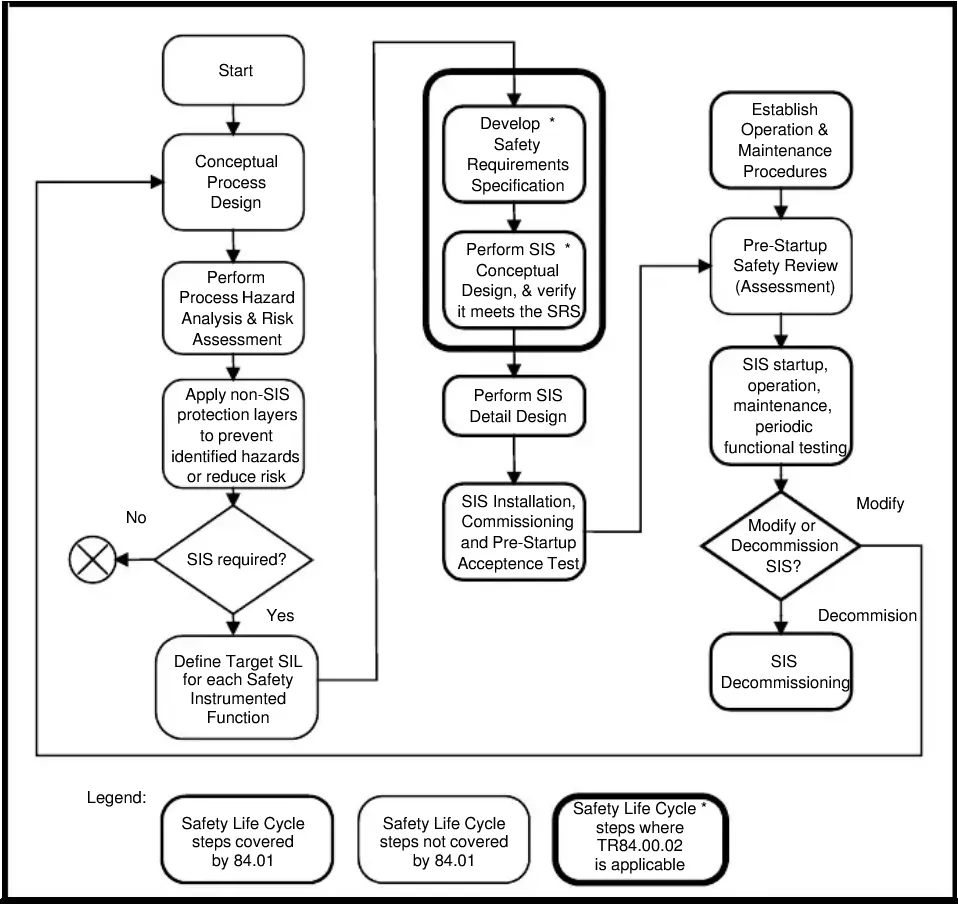
This is relevant not only to drilling engineers but to instrumentation and safety system designers: the mud return flow sensor feeds into the well-control decision loop, and its output quality directly affects the confidence interval around kick detection thresholds. Where this signal feeds a safety instrumented function, the entire measurement loop — including the sensor — must be designed, validated, and managed under the requirements of IEC 61511 (Functional Safety: Safety Instrumented Systems for the Process Industry Sector). The sensor’s accuracy, response time, and failure modes must be characterized and documented as part of the SIS Safety Integrity Level (SIL) assessment.
AI-Assisted Measurement: Reducing Noise-Induced Error in Gamma-Based Meters
Nuclear gauge-based multiphase meters use gamma-ray attenuation to infer phase fractions. Their accuracy is sensitive to detector window contamination (scale or wax deposition on the detector face) and to statistical noise in the gamma count rate, which increases as source activity decays over the meter’s service life.
Research published in PLOS ONE (2026) presents an adaptive framework combining an Adaptive Unscented Kalman Filter (AUKF) with a Physics-Informed Neural Network (PINN) — termed AUKF-PINN — for processing gamma-based multiphase flow measurements under noisy industrial conditions. The approach uses the physical relationships governing gamma attenuation as constraints within the neural network, preventing the model from producing physically impossible phase fraction outputs even when the raw signal is degraded by noise or detector fouling. The Kalman filter component handles the dynamic state estimation, updating predictions as new measurements arrive.
The practical benefit is improved robustness of phase fraction measurement in conditions — late-life sources, partial detector fouling, high-noise environments — where conventional signal processing degrades. For operators, this extends the useful service interval of existing gamma-based meters and reduces the frequency of interventions required to maintain measurement quality.
Methane Emission Quantification: A Growing Instrumentation Requirement
Regulatory pressure on methane emissions reporting has created demand for point-source methane instruments that can be deployed at individual equipment items — compressor seals, valve packing, flanges — rather than relying solely on periodic manual leak detection and repair (LDAR) surveys. Self-installed IoT-connected methane sensors capable of continuous quantification are entering service, providing a persistent measurement record that supports both regulatory reporting and maintenance prioritisation. This is a distinct instrumentation category from process measurement, but it draws on the same principles of sensor selection, calibration traceability, and data quality management.
Practical Checklist: Evaluating an Instrumentation Upgrade
Before approving a measurement system upgrade or new technology deployment, work through the following:
- Calibration traceability: Can the vendor provide an unbroken calibration chain to a national standard? What is the recalibration interval and method?
- Fluid model currency: For MPFMs, when was the fluid model last updated, and does the update process have a documented procedure?
- Pressure compensation: For Coriolis meters, is compensation fixed or dynamic? Does the operating pressure range match the compensation design basis?
- Safety loop classification: If the measurement feeds a safety instrumented function, has the sensor been assessed under
IEC 61511for the required Safety Integrity Level? - Environmental conditions: Does the sensor specification cover the full range of operating temperature, pressure, and flow regime expected over field life, not just initial conditions?
- Maintenance access: Can the sensor be removed for verification without process shutdown? If not, is an in-situ verification method available?
- Data integration: Does the instrument output integrate with the existing historian and alarm management system, or does it require a separate infrastructure?
Illustrative scenario: An offshore platform operator notices a growing discrepancy between MPFM-reported well rates and the monthly separator test results on a well that has been producing for several years. Investigation reveals that the MPFM fluid model has not been updated since commissioning, while the GOR has increased substantially. Updating the PVT model and slip correction parameters brings the MPFM back into agreement with separator tests — without any physical work on the meter itself. This scenario illustrates why fluid model maintenance is as important as hardware maintenance for MPFM accuracy.
Conclusion and Next Steps
The common thread across these developments — dynamic pressure compensation in Coriolis meters, adaptive PVT and slip correction in MPFMs, hybrid multiphase sensors for drilling, and AI-assisted gamma processing — is that static calibration at commissioning is no longer sufficient for applications where operating conditions evolve. Accuracy requires that the measurement system adapt to current conditions, not just the conditions that existed when it was installed.
For engineering and maintenance teams, the immediate actions are:
- Audit existing MPFM fluid models against current well test data and establish a formal update schedule
- Review Coriolis meter pressure compensation settings against current operating pressure ranges
- Confirm that any measurement feeding a safety instrumented function has been assessed under
IEC 61511 - For new procurements in deepwater or high-pressure applications, require vendors to demonstrate performance at end-of-field-life conditions, not just initial conditions
Instrumentation accuracy is not a one-time commissioning task. It is a continuous engineering responsibility.