Oil and gas operations run hot, run hard, and don't forgive mistakes. A single oversight at a wellhead or a compressor station can turn a routine day into a disaster. Companies manage this reality with layers of engineered protection. The most important of those layers is the Safety Instrumented System (SIS). This article looks at how SIS actually work and why they matter in oil and gas facilities.
Understanding Safety Instrumented Systems
A Safety Instrumented System is a dedicated set of hardware and software controls built to either prevent a hazardous event or reduce its consequences. SIS keep industrial processes within safe operating boundaries, particularly in environments where the margin for error is thin.
Components of a Safety Instrumented System
An SIS typically has three main parts:
- Sensors (Input Devices): These pick up abnormal conditions — excessive pressure, temperature swings, gas leaks, the usual suspects.
- Logic Solvers (Controllers): The brain of the operation. The logic solver takes sensor input, runs it against set parameters, and decides what to do.
- Final Control Elements (Output Devices): These carry out the action the logic solver calls for — slamming a valve shut, firing up emergency cooling, and so on.
How SIS Work
When sensors detect a process deviation, the logic solver compares the data against predefined safety parameters. If the deviation pushes past safe limits, the SIS triggers corrective action through the final control elements. This happens fast. That speed is the whole point — it's what keeps things from going sideways.
Functioning of Safety Instrumented Systems
SIS operate on the principle of functional safety. The goal is straightforward: bring the risk of a hazardous event down to an acceptable level. A key design requirement is that SIS must be independent of the regular process control systems. That way, safety actions can still fire even if the primary controls go down.
Integration with Process Control Systems
SIS sit alongside standard process controls, but they are separate systems. The Process Control System (PCS) handles day-to-day operations — production optimization, efficiency, the steady-state stuff. The SIS only steps in when things go wrong, pulling the process back to a safe state.
Safety Integrity Levels (SIL)
A critical piece of SIS design is the Safety Integrity Level (SIL), which measures how well a safety function needs to perform. Per IEC 61511, SIL levels run from 1 to 4, with SIL 4 representing the highest risk reduction.
- SIL 1: Lowest level of safety integrity.
- SIL 2: Moderate level of risk reduction.
- SIL 3: High level of risk reduction.
- SIL 4: Highest level, applied in extremely hazardous situations.
Picking the right SIL requires a thorough risk assessment. Get that wrong and you've got a system that doesn't match the hazard it's supposed to address.
Examples of SIS in Action
- Emergency Shutdown Systems (ESD): Shut down operations automatically when unsafe conditions show up.
- Fire and Gas Detection Systems: Spot fires or gas leaks and kick off suppression equipment.
- Pressure Relief Systems: Bleed off pressure before equipment ruptures or explodes.
The Critical Role of SIS in Risk Mitigation
Oil and gas facilities carry a heavy risk load. Hydrocarbons are volatile. Processes are complex. SIS provide the protective layers that stop accidents from happening or keep them from getting worse.
Common Risks in Oil and Gas Facilities
- Explosions and Fires: Fueled by flammable gases and liquids.
- Toxic Releases: Harmful emissions that can hurt personnel and the environment.
- Equipment Failure: Leading to downtime or safety hazards.
How SIS Mitigate Risks
- Preventing Escalations: SIS catch early signs of process deviations and trigger corrective actions before things spiral.
- Protecting Personnel: Controlling or avoiding hazardous events directly reduces the risk of injury or death.
- Safeguarding Assets: Limiting damage to equipment and infrastructure keeps operations running.
Case Studies
Case Study 1: Preventing a Gas Leak Explosion
At an offshore oil platform, a sudden increase in pipeline pressure was detected by SIS sensors. The logic solver quickly identified the deviation, and the SIS activated emergency shutdown valves. This action prevented a potential gas leak explosion, safeguarding the platform and its crew.
Case Study 2: Mitigating Fire Risks
In a refinery, a fire was detected in its early stages by the SIS. The system automatically initiated fire suppression protocols and shut down nearby equipment. The rapid response minimized damage and prevented the fire from spreading.
Regulations and Standards
Compliance with international standards is essential for the effective implementation of SIS. These standards lay out the rules for designing, building, and maintaining safety systems.
IEC 61511 and ISA 84
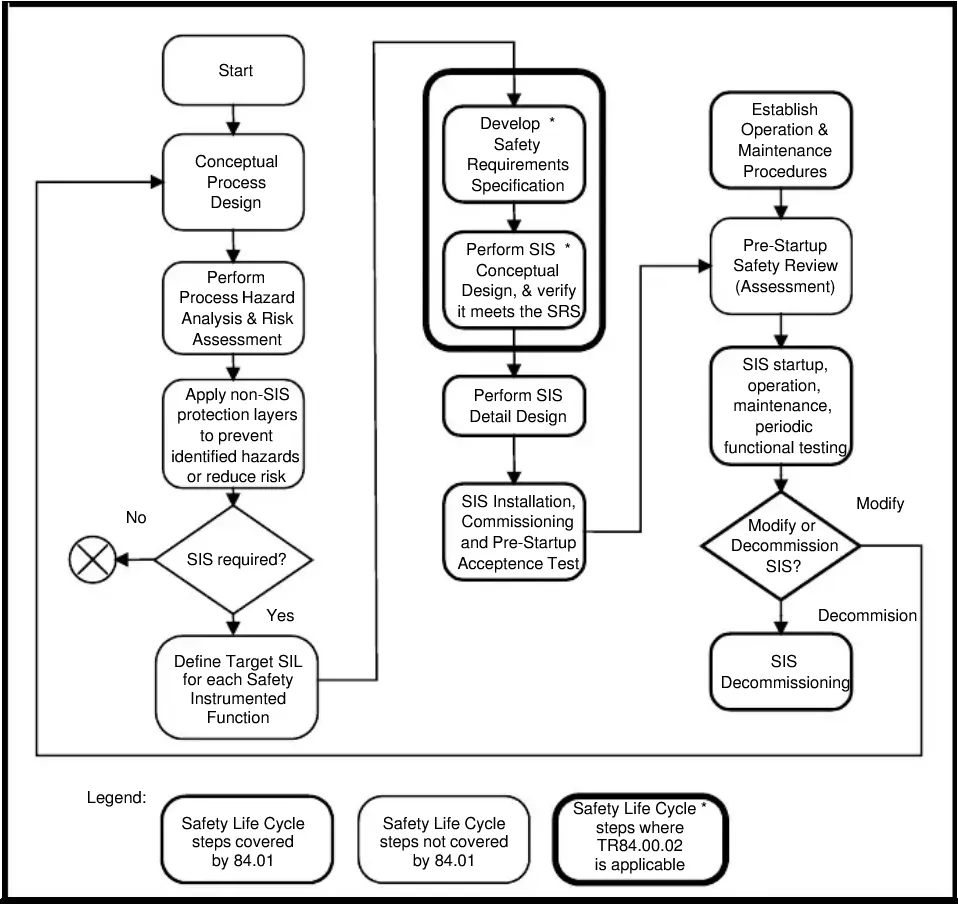
IEC 61511: An international standard specifically for the process industry, providing a framework for the SIS safety lifecycle — covering design, implementation, operation, and decommissioning.ISA-84: The U.S. standard that aligns withIEC 61511, detailing requirements for safety instrumented functions and systems in the process industries.
Importance of Compliance
Following these standards keeps SIS aligned with established best practices. It lowers risk and demonstrates that the facility takes safety seriously — not just on paper, but in practice.
Implementing SIS in Oil and Gas Facilities
SIS implementation takes careful planning, solid engineering, and ongoing maintenance. There's no shortcut.
Steps for Implementation
- Hazard and Risk Assessment: Identify potential hazards and assess associated risks.
- Safety Requirement Specification (SRS): Define what the SIS must achieve.
- Design and Engineering: Develop the SIS architecture based on the SRS.
- Installation and Commissioning: Implement the SIS and verify that it functions correctly.
- Validation and Verification: Test the SIS to confirm it meets all safety requirements.
- Operation and Maintenance: Regularly monitor and maintain the SIS to ensure ongoing reliability.
Challenges and Best Practices
- Integration Complexity: Getting SIS to talk cleanly with existing systems takes real effort.
- Best Practice: Engage multidisciplinary teams during the design phase.
- Maintaining Independence: Keeping SIS separate from other control systems to prevent common cause failures.
- Best Practice: Use diverse technologies and separate hardware to maintain system independence.
- Software Reliability: Software deficiencies can undermine SIS effectiveness.
- Best Practice: Employ rigorous testing and validation procedures for all software components, consistent with the requirements of
IEC 61511.
- Best Practice: Employ rigorous testing and validation procedures for all software components, consistent with the requirements of
Conclusion
Safety Instrumented Systems are a non-negotiable part of oil and gas operations. They provide a critical layer of protection against the hazards that come with handling hydrocarbons at scale. Understanding how SIS function and how they fit into the broader risk mitigation strategy helps companies protect their assets and, more importantly, their people. As the industry keeps pushing into more challenging environments, robust SIS will remain a fundamental part of keeping operations safe.
Investing in Safety Instrumented Systems is not just a regulatory requirement but a moral imperative. It reflects a company's commitment to safety, operational excellence, and social responsibility.